
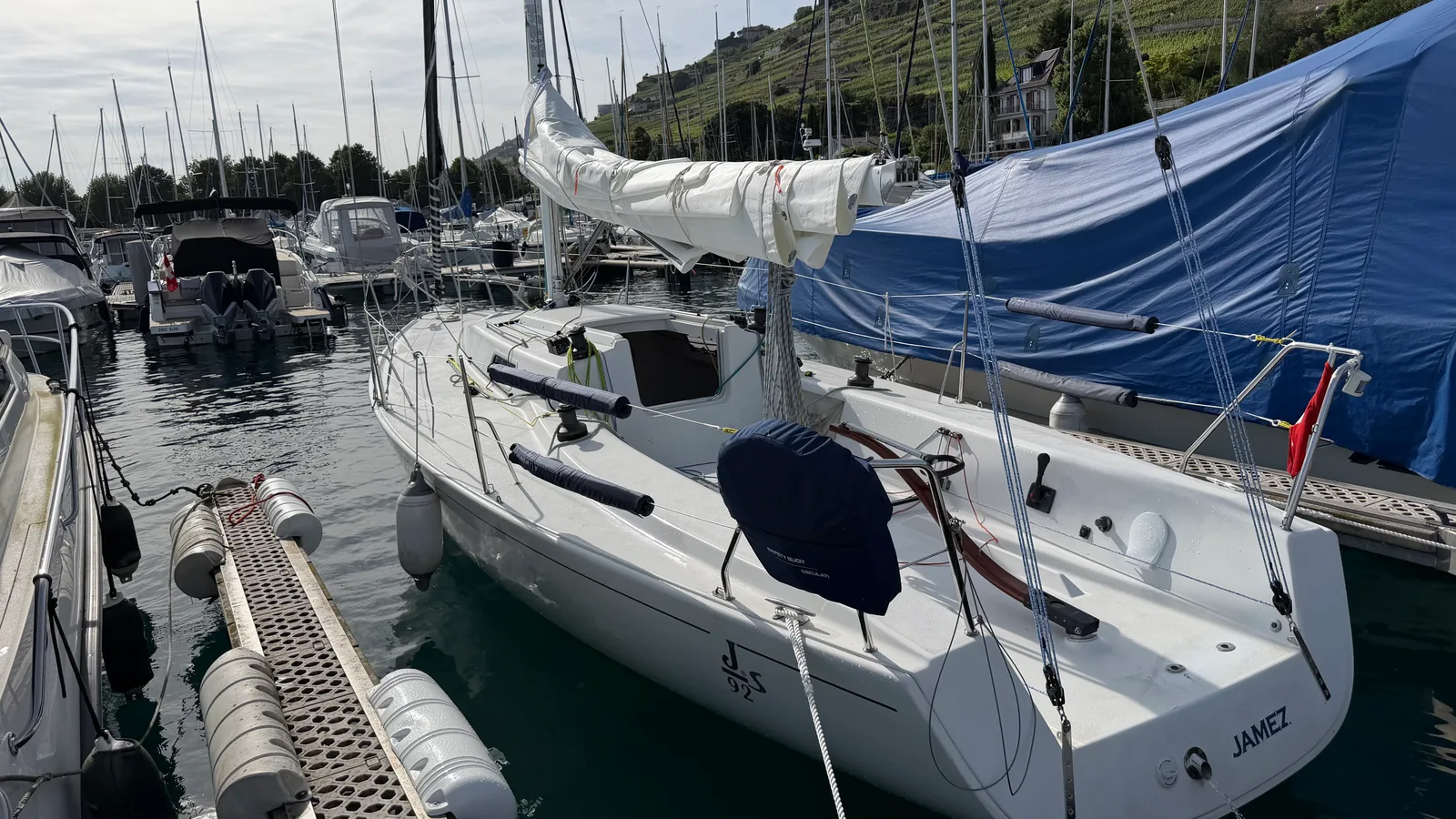
Systems 3 min read
Stern safety refit: horseshoe buoy, stanchion and stern light
Restoring a J/92s stern safety station: an Osculati horseshoe buoy kit, a straightened stanchion, and a re-welded stern-light plate.
Read next
A manual and an automatic bilge pump on a J/92s: FP4 cockpit reinforcement, automatic float-switch operation, and a waterproof fuse holder.
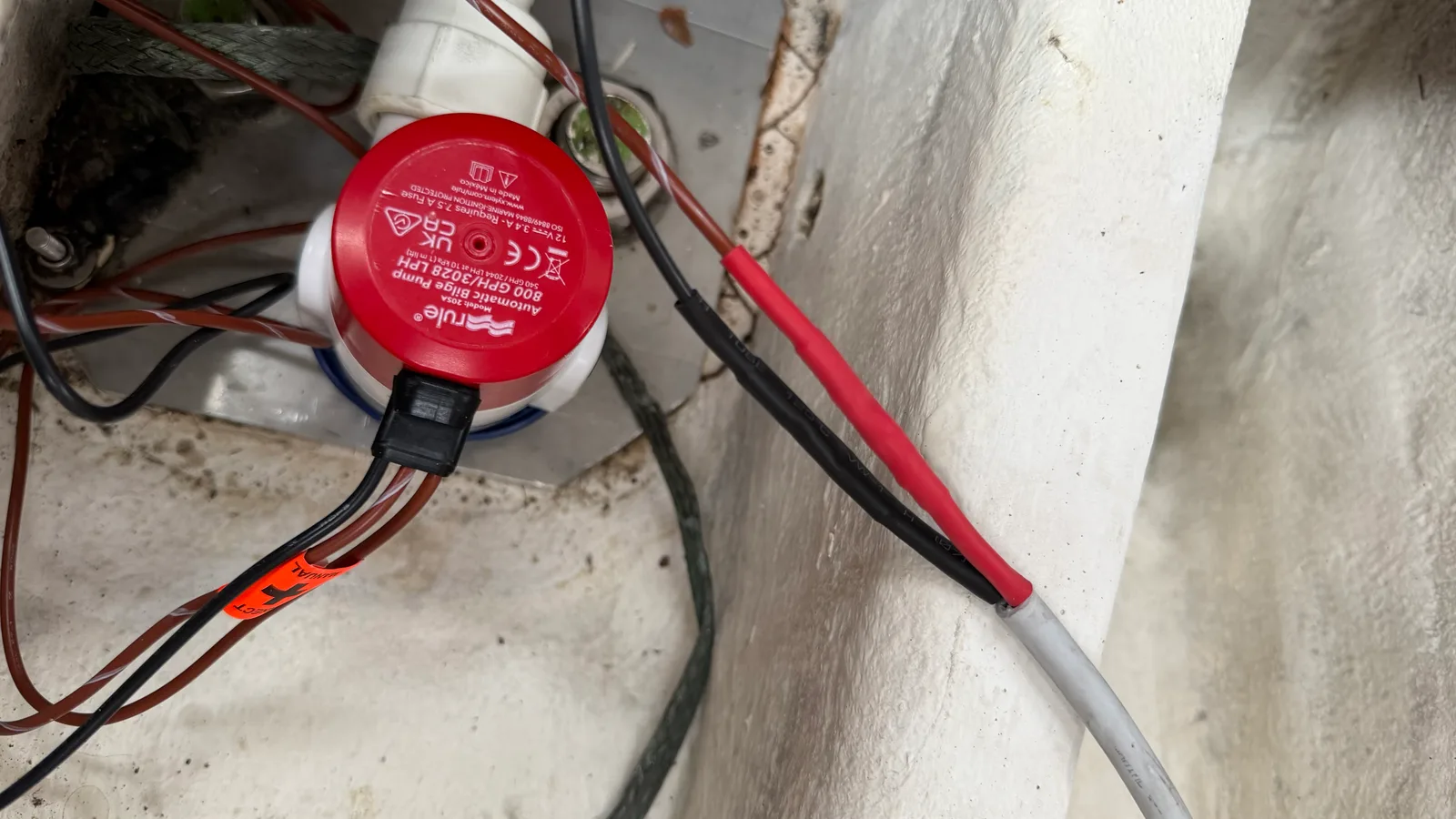
Bilge safety comes from two pumps that fail differently. On Jamais, a 2008 J/92s on Lake Geneva, the bilge is served by a manual pump that needs no electricity, and an automatic electric pump that works when no one is aboard. Each covers exactly where the other is blind — and each took some groundwork to fit properly.
The Whale Smart Bail manual pump is a diaphragm pump, worked by a removable lever that clips onto a bulkhead-mounted socket. It mounts entirely dry on the aft cockpit bulkhead, draws from the low point of the bilge and discharges to an outboard through-hull. Its merit is one sentence: it works without a drop of electricity. Flat battery, battery switch off, a flooded electric pump — it still empties the bilge, by hand. It’s the last line of defence, the one that depends on nothing.
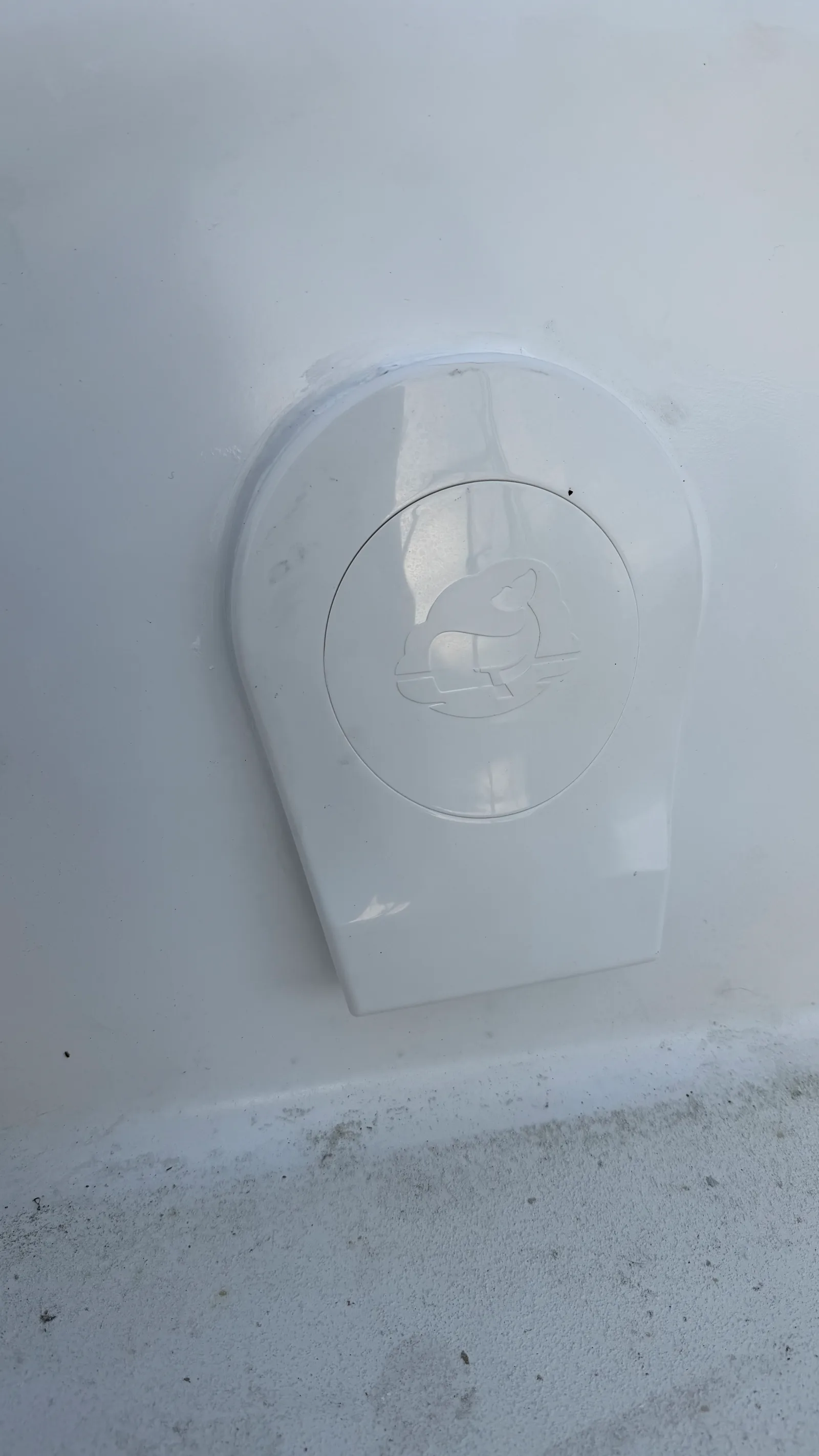
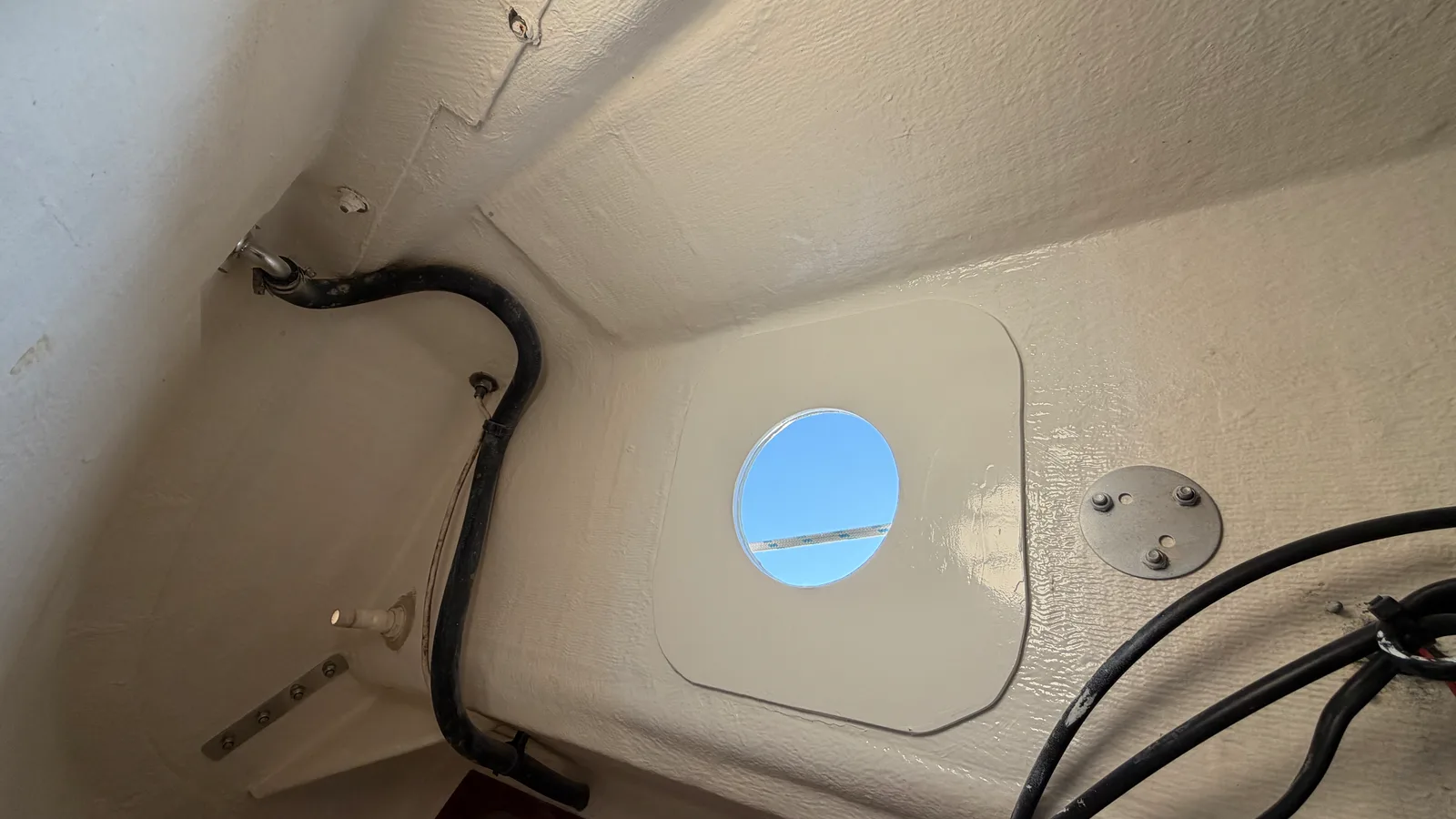
A manual pump is worked by hand — every stroke of the lever puts real load into its mount. Fixing it straight to the cockpit skin would work the laminate with every stroke, season after season, to fatigue. So it needs a rigid base to spread the fixing loads. The choice fell on a 5 mm FP4 panel bonded with epoxy.
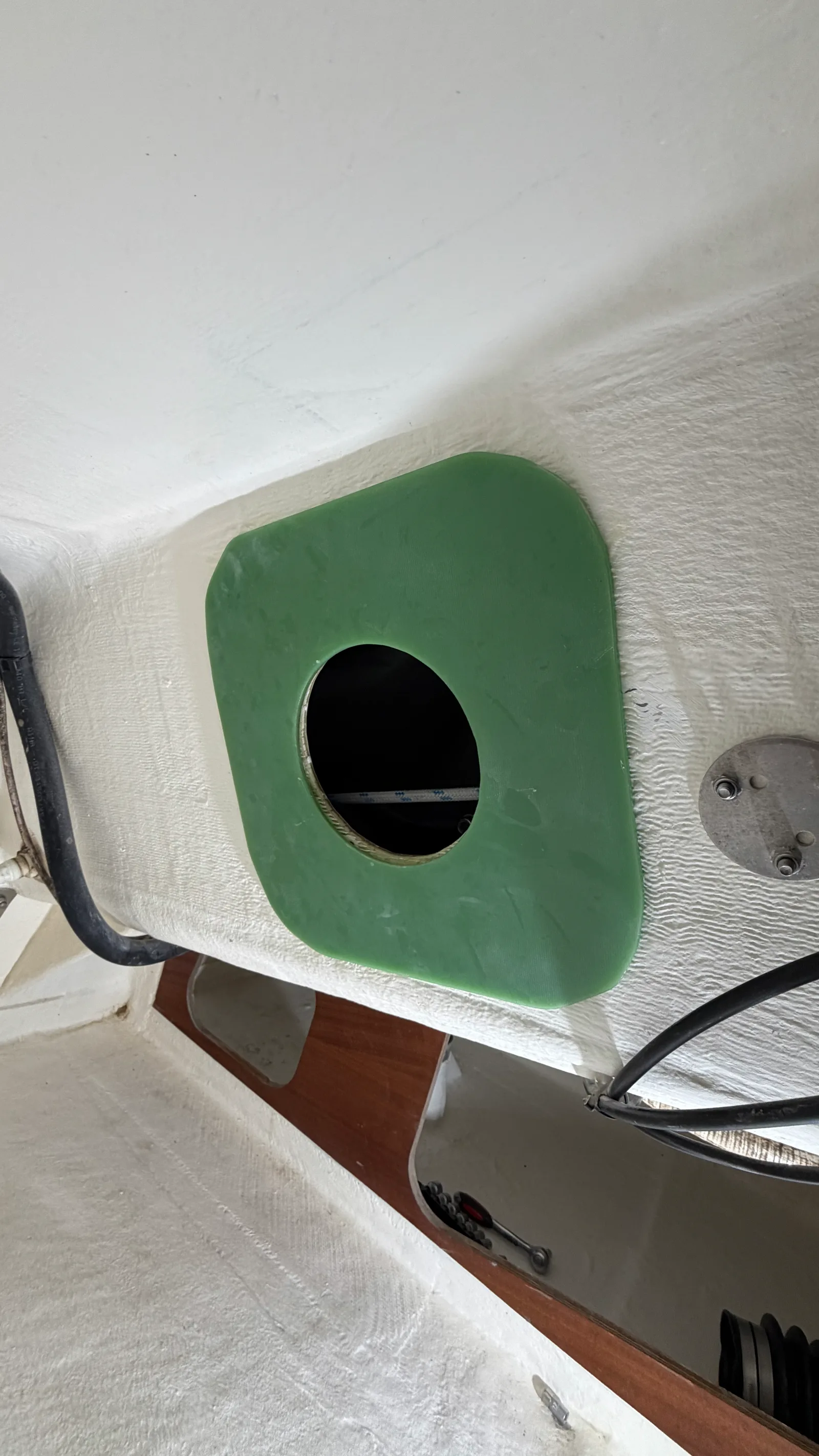
FP4 is a glass-fibre and epoxy laminate (the same family as G10 / FR4). For a given thickness it’s far stiffer and stronger than plywood, it doesn’t absorb water, doesn’t rot, doesn’t delaminate, and stays dimensionally stable. In a damp zone like the cockpit that matters: a marine-plywood reinforcement, however well treated, eventually soaks up and gives way; FP4 doesn’t. And bonded with epoxy it becomes one body with the hull laminate. Five millimetres are enough to turn a flexible skin into a solid base, without adding bulk or a material that degrades.
The real gain is automatic operation. Before, the electric bilge pump had to be switched on by hand — useless with the boat empty. The new Rule 800 (model 205A), which replaced a manually operated Rule 500, has an integrated level sensor: it senses water and starts on its own. That’s what covers the real case — the boat left alone, on the mooring or in its berth, with a water ingress no one is there to see.
Going from 500 to 800 gph adds a little flow margin, but that’s secondary and sufficient; the existing 19 mm discharge line was kept, suited to the real flow on this boat. The pump draws about 3.4 A, protected by a 7.5 A fuse.
A Rule 800 Auto is a three-wire pump, and that’s the whole point:
Here’s the reasoning: if the AUTO feed ran through a breaker, the pump would stop keeping watch with the boat shut — so AUTO is wired straight to the bus bar, with its own fuse, upstream of the panel. The manual override stays on the panel, within reach. It’s the same star logic as the rest of the electrical system, applied to the one function that must outlive everything else.
The AUTO feed’s 7.5 A fuse lives in a waterproof fuse holder with an alarm LED. Waterproof, because a fuse that lives near the bilge has no business out in the open. And with an alarm LED, because a fuse blown in silence is a dead automatic pump you only discover at the worst moment. The LED turns an invisible failure into a light you catch at a glance.
In the 2026 setup, the AUTO feed still sits downstream of the battery switch: the automatic pump therefore only keeps watch with the switch on. On a lake boat, visited often and never left alone for weeks, that’s a compromise accepted with eyes open — and one meant to evolve: the planned lithium refit will give the pump its own dedicated feed, independent of the battery switch.
Let’s be clear: since the boat has been in the water, there has never been water in the bilge. That’s the result of all the other work in this logbook — in particular the repositioning of the bathing-ladder holes and the mast collar — which closed the paths water could get in by.
That’s no reason to treat the bilge pump as a detail. It’s one of those pieces of kit you hope never to use: the better the work, the less the pump is needed. But if it ever were needed, it has to be well-sized, efficient and effective — which is why it was fitted with the same care as everything else, not as a fallback.
Why two pumps rather than one bigger one? Because they fail differently: the manual works without electricity, the automatic keeps watch with no one aboard. A single pump, however big, leaves a blind spot.
What changes compared with the old electric pump? Before, you had to switch it on by hand. The Rule 800 Auto senses water and starts on its own: the real gain is automatic operation, not flow.
Is a 19 mm discharge enough for a Rule 800? Yes. With the real flow (cut down by head and hose), a 19 mm outlet suits a boat like this; there was no need to enlarge it.
Why an FP4 reinforcement for a hand pump? Because every stroke of the lever puts load into the mount. FP4 — a rigid glass-epoxy laminate that doesn’t rot or absorb water — makes a solid base that doesn’t fatigue the cockpit skin over time.
This job is part of Jamais’s logbook. See also the full 12V electrical refit.
Restoring a J/92s stern safety station: an Osculati horseshoe buoy kit, a straightened stanchion, and a re-welded stern-light plate.
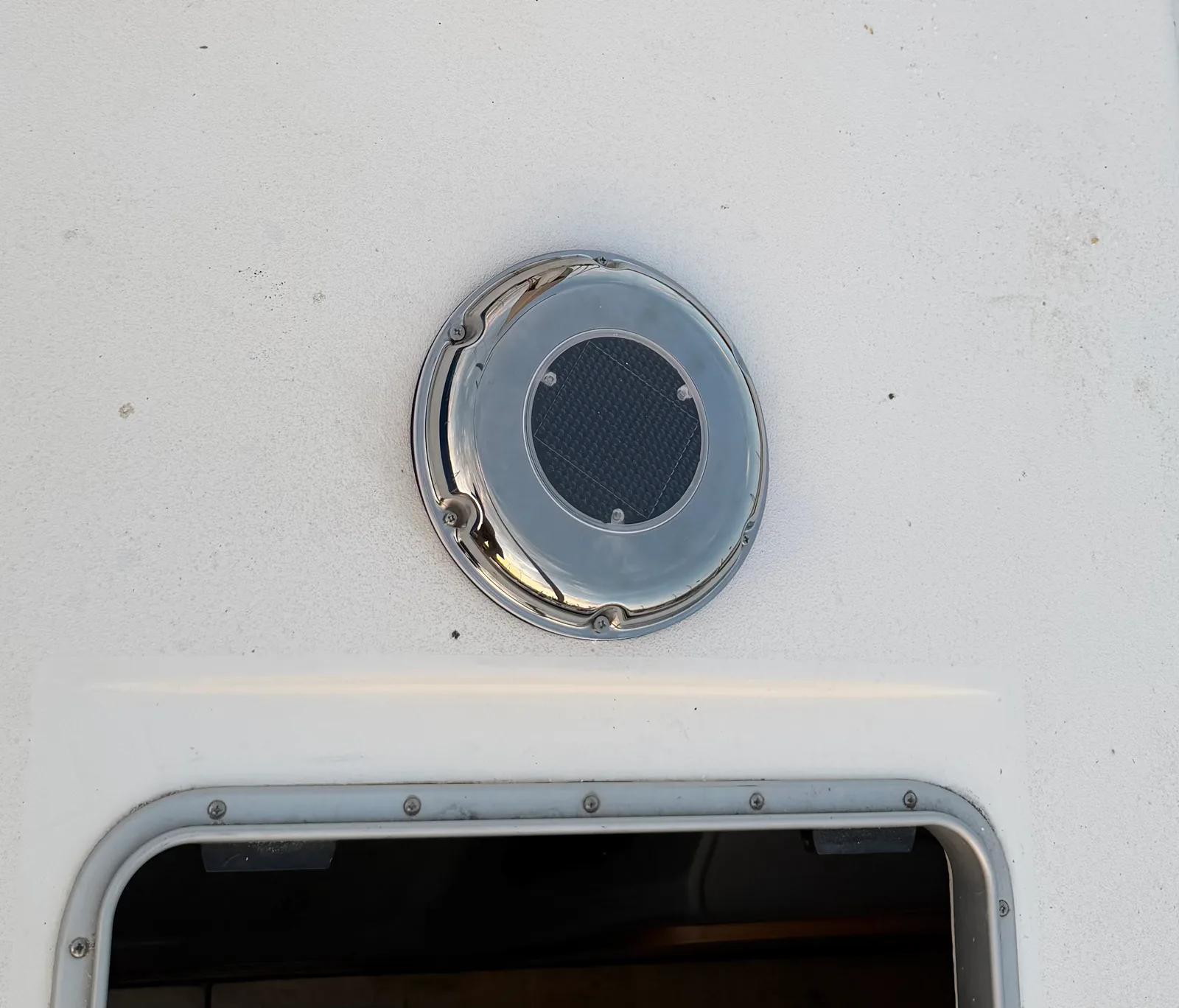
An autonomous solar vent on a J/92s: a low-to-high air circuit, 25 m³/h extraction with no drain on the batteries, and a mould-free interior.
Fitting an Osculati emergency ladder on a J/92s on Lake Geneva: why it's essential when sailing solo, and the FP4 reinforcement that stops it tearing a thin transom.
Order your parts, or let’s talk through your programme first.