
Systems 3 min read
Stern safety refit: horseshoe buoy, stanchion and stern light
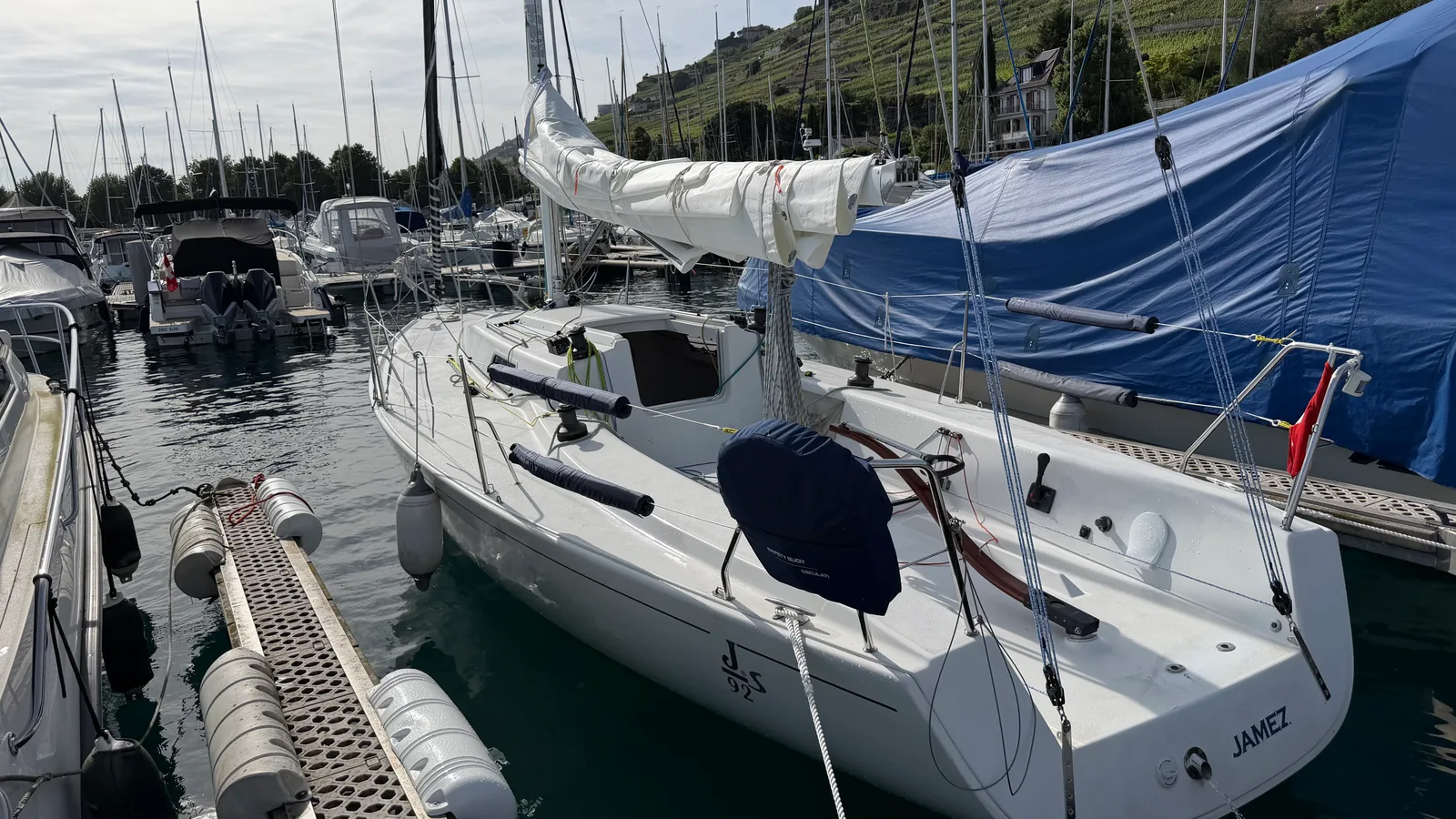
Restoring a J/92s stern safety station: an Osculati horseshoe buoy kit, a straightened stanchion, and a re-welded stern-light plate.
Read next
An autonomous solar vent on a J/92s: a low-to-high air circuit, 25 m³/h extraction with no drain on the batteries, and a mould-free interior.
Continuously airing a closed-up sailboat is what saves the interior from mould. The proof was aboard Jamais, a 2008 J/92s on Lake Geneva, on the day of purchase: the inside was taking on mould. The answer: fit ventilation that runs continuously, boat shut, drawing nothing from the batteries — and to think the air’s path through, end to end.
At purchase, Jamais’s interior bore the marks of a boat left shut with no air: mould on the bulkheads, in the lockers, on the fabrics. Nothing exceptional — it’s the fate of any sailboat left closed with damp air that has nowhere to go. Cleaning treats the stain; it doesn’t treat the cause. The cause is air that stagnates. That realisation, back in February, is what set off the search for real ventilation.
The principle is one sentence: air comes in low through the companionway, and leaves high through the vent. The vent extracts continuously; but it has to have air to pull. On Jamais, make-up air comes in by three paths: the forward deck hatch left ajar, the gaps at the companionway corners where the sliding panels meet, and holes drilled in the vertical plexiglass companionway panel. That last path is the only one that stays open even with the boat fully shut and locked — and that’s the whole point of it.
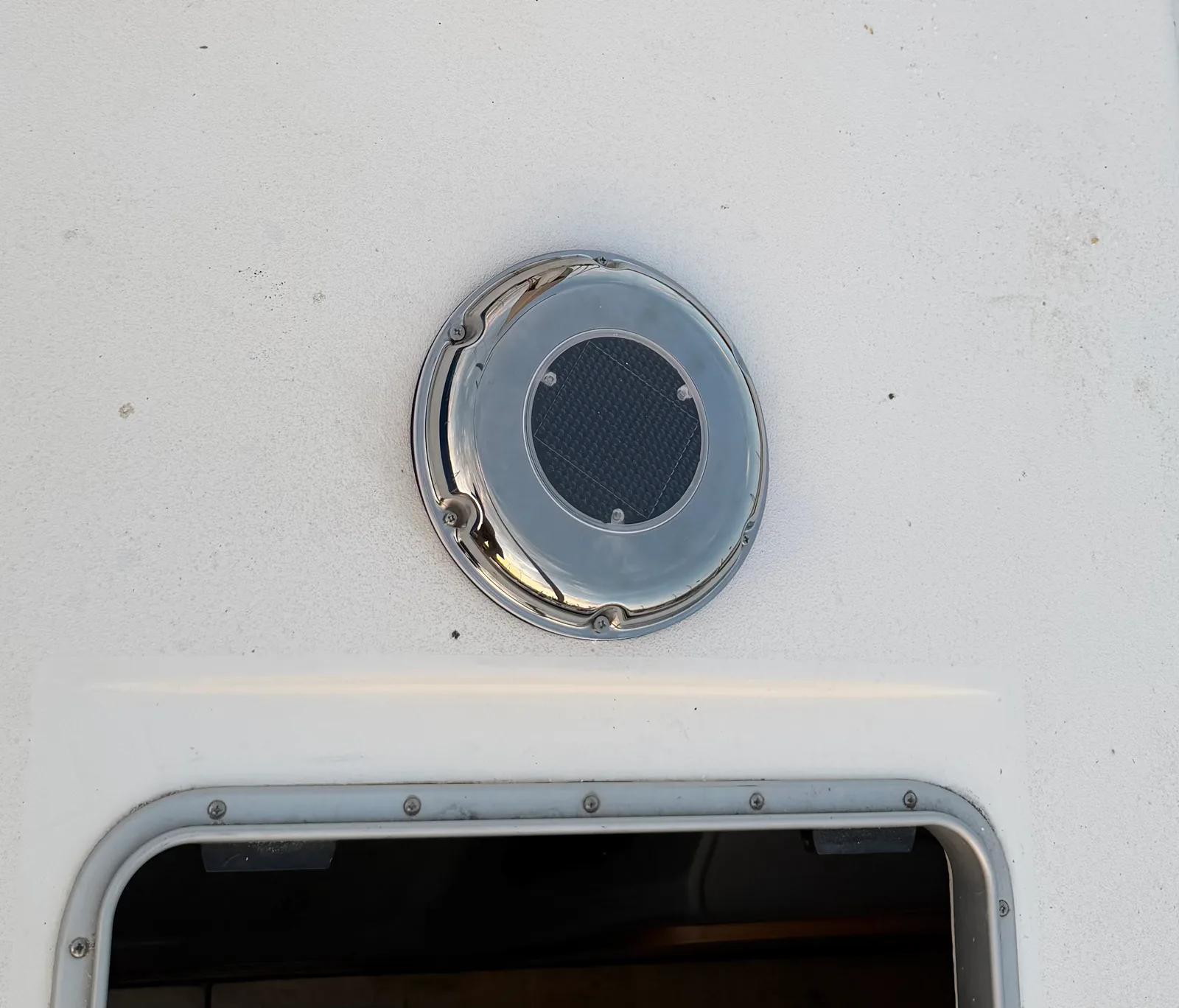
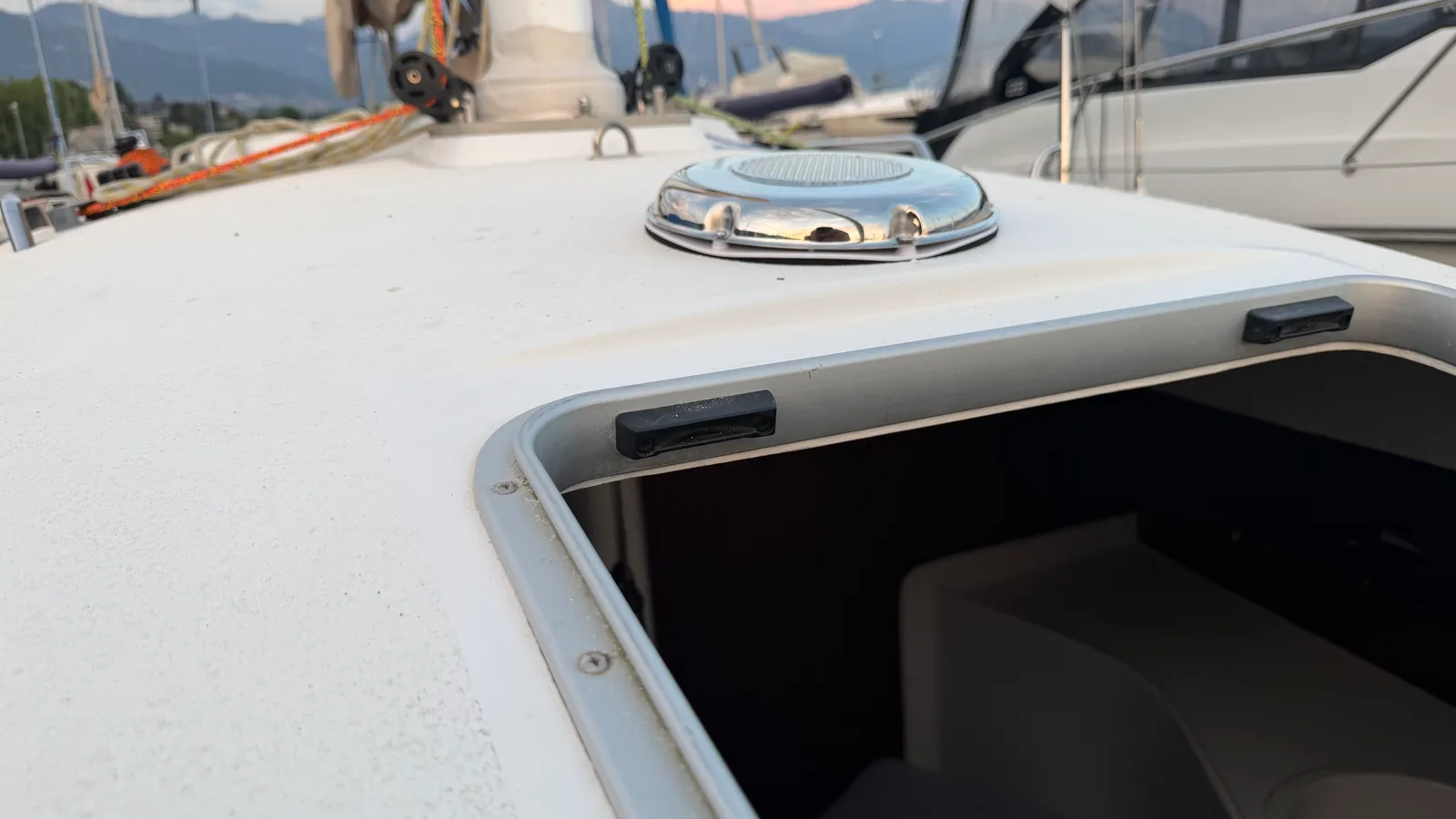
The outlet is a Solarvent solar vent, fitted in extraction mode. It carries its own photovoltaic cell, driving a fan rated at about 25 m³/h — enough to renew a J/92s interior’s volume several times a day. The essential is one word: autonomous. No wiring to the panel, no drain on the bank, and above all it runs boat shut, battery switch off — exactly when the damp sets in. A 12V-wired extractor, by contrast, assumes the circuit live and a permanent draw: the opposite of what you want on a boat left alone.
Once fitted, another asset of this model shows: its minimal height — only 35 mm above the deck. On a coach roof where the running rigging lies flat and where feet cross the deck when tacking, an obstacle that stands too proud becomes a snag point. At 35 mm the vent stays under hands and feet.
This is where the real reasoning sits. When you leave the boat locked, you can crack the forward hatch — but not always, and not for long: security, rain, spray. So there had to be a permanent air inlet, one that works with everything shut. Hence drilling the plexiglass companionway panel.
The design chosen: a staggered grille, 5 + 4 + 5 pattern, that is fourteen Ø 8 mm holes below the companionway lock — three rows 38 mm apart, the middle row offset by 19 mm to cross the flows. Above all, the holes are drilled at 45° downward: no straight-through path, so no rain or spray drives straight in, while air still passes.
On flow, honesty is due: the grille amounts to only a few cm² — modest next to a cracked hatch. So it isn’t the main inlet, but the permanent, secure one: the one that guarantees the vent air to pull even when everything else is locked. The bulk of the renewal comes through the hatch and the companionway gaps; the holes, meanwhile, never close.
In practice, only two holes were drilled cleanly, then the rest left: a standard twist bit grabs and chips acrylic the moment it breaks through. The right method, kept for next time, is a step drill (unibit) or an acrylic-specific bit, at low speed with a sacrificial backing behind the panel. Two clean inlets beat ten shattered ones.
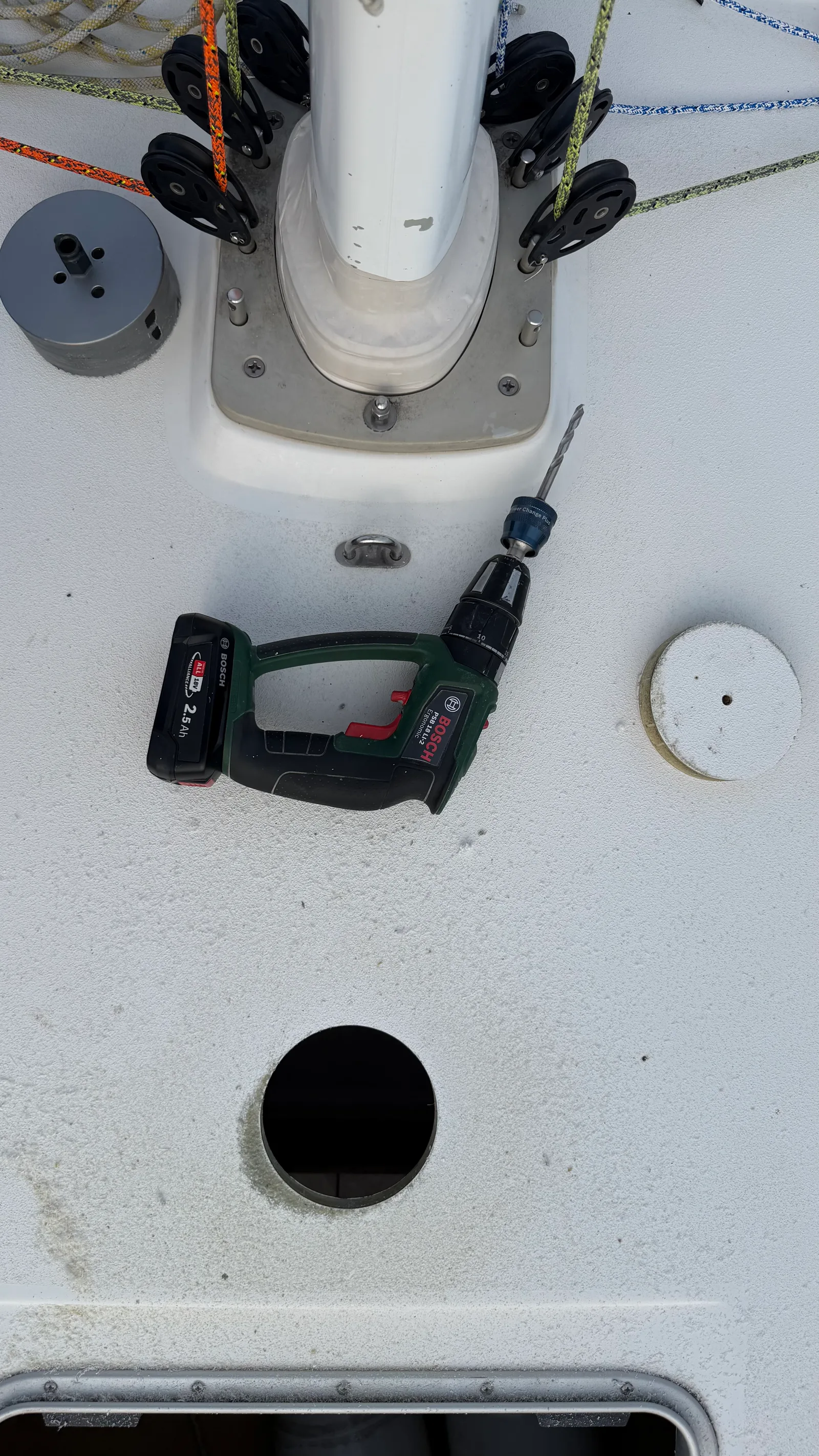
The outlet has a price: the vent needs a large cutout in the deck. On a small boat that’s no trivial thing — which is why several months passed between the February purchase and the July fit. You don’t cut a big hole in a deck lightly, and the cutout has to be sealed carefully: otherwise you let in the very water you’re trying to drive out.
Ventilating is good; ventilating where the damp collects is better. In the forward cabin, a stainless-steel rail will be fitted, almost directly beneath the vent, to hang lines, life jackets and fenders. The idea is practical: wet gear will dry right under the air outlet, and its moisture extracted where it’s produced, instead of spreading through the boat. Putting the damp under the ventilation doubles the effect of the same vent.
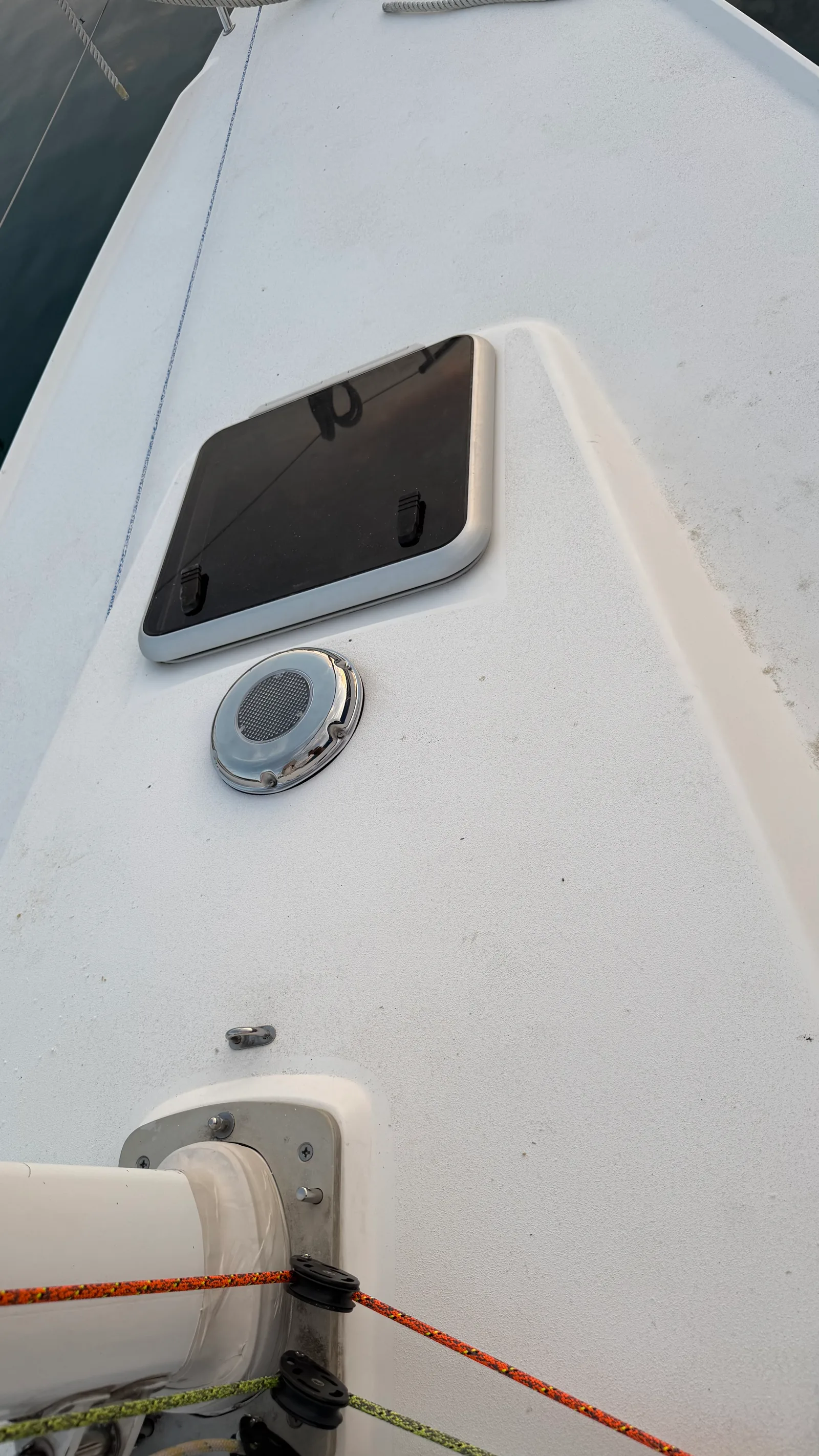
A boat that breathes on its own, day after day, unattended and without drawing a single amp — and an interior that doesn’t go mouldy again. Once the cutout was made and the air circuit thought through end to end, the result was worth the wait.
Why does mould take hold in a sailboat? Because damp air stays shut in without circulating. Closed for a week, a boat condenses on cold surfaces and mould spreads to bulkheads, lockers and fabrics.
Why solar rather than wired to the 12V? Because it runs with the battery switch off, no wiring and no drain on the bank — precisely when the damp sets in, boat left alone.
Why drill the companionway panel? To give the vent a permanent air inlet that stays open even with the boat locked. Drilled at 45°, the holes let air through without offering a straight path to rain.
How do you drill plexiglass cleanly? With a step drill or an acrylic-specific bit, at low speed with a backing piece behind. A standard twist bit grabs and chips the panel.
What flow rate does a solar vent give? The model fitted on Jamais is rated at about 25 m³/h — enough to renew a J/92s interior’s air several times a day.
This job is part of Jamais’s logbook. See also how to seal the engine-bay woodwork.
Restoring a J/92s stern safety station: an Osculati horseshoe buoy kit, a straightened stanchion, and a re-welded stern-light plate.
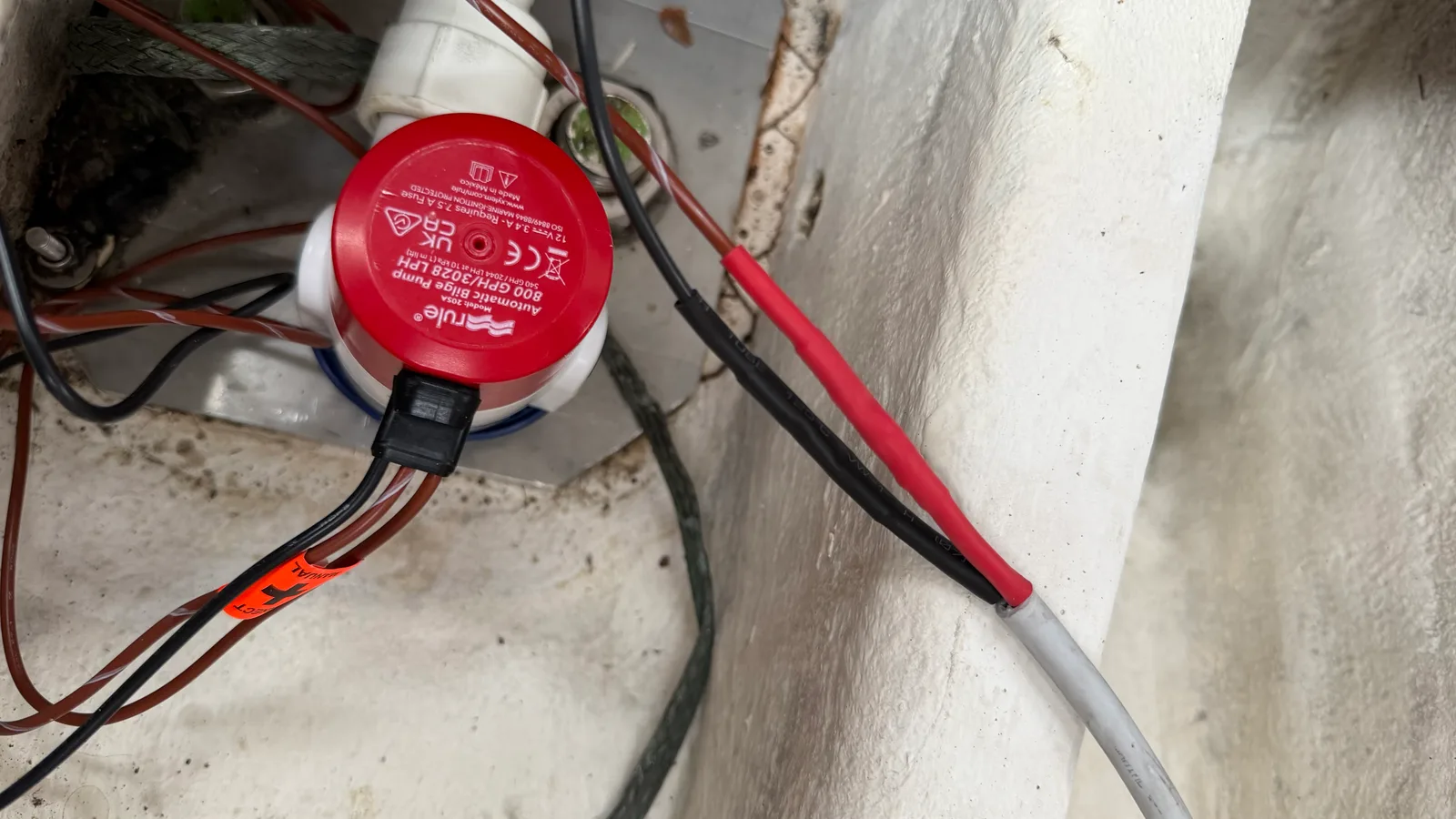
A manual and an automatic bilge pump on a J/92s: FP4 cockpit reinforcement, automatic float-switch operation, and a waterproof fuse holder.
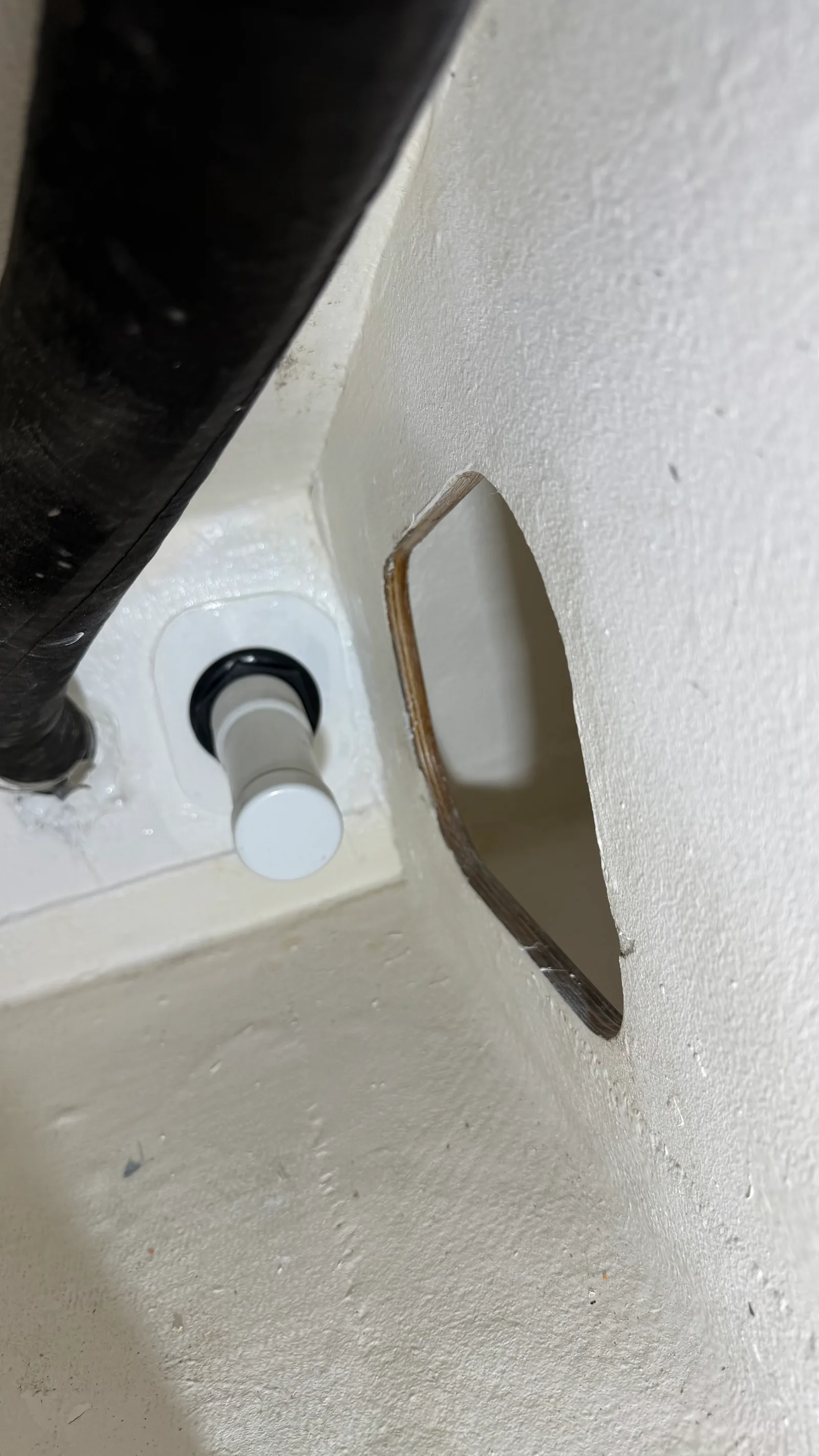
Fitting an Osculati emergency ladder on a J/92s on Lake Geneva: why it's essential when sailing solo, and the FP4 reinforcement that stops it tearing a thin transom.
Order your parts, or let’s talk through your programme first.