Electrical 7 min read
Rewiring a J/92s from scratch: a 12V electrical refit
Rebuilding the 12V system on a J/92s to cut fire and failure risk: star topology, dedicated feeds, layered protection and clear labelling.
Read next
Choosing and sizing 12V breakers on a J/92s: separate breaker + rocker architecture, Osculati vs E-T-A, and channel-by-channel amperage logic.
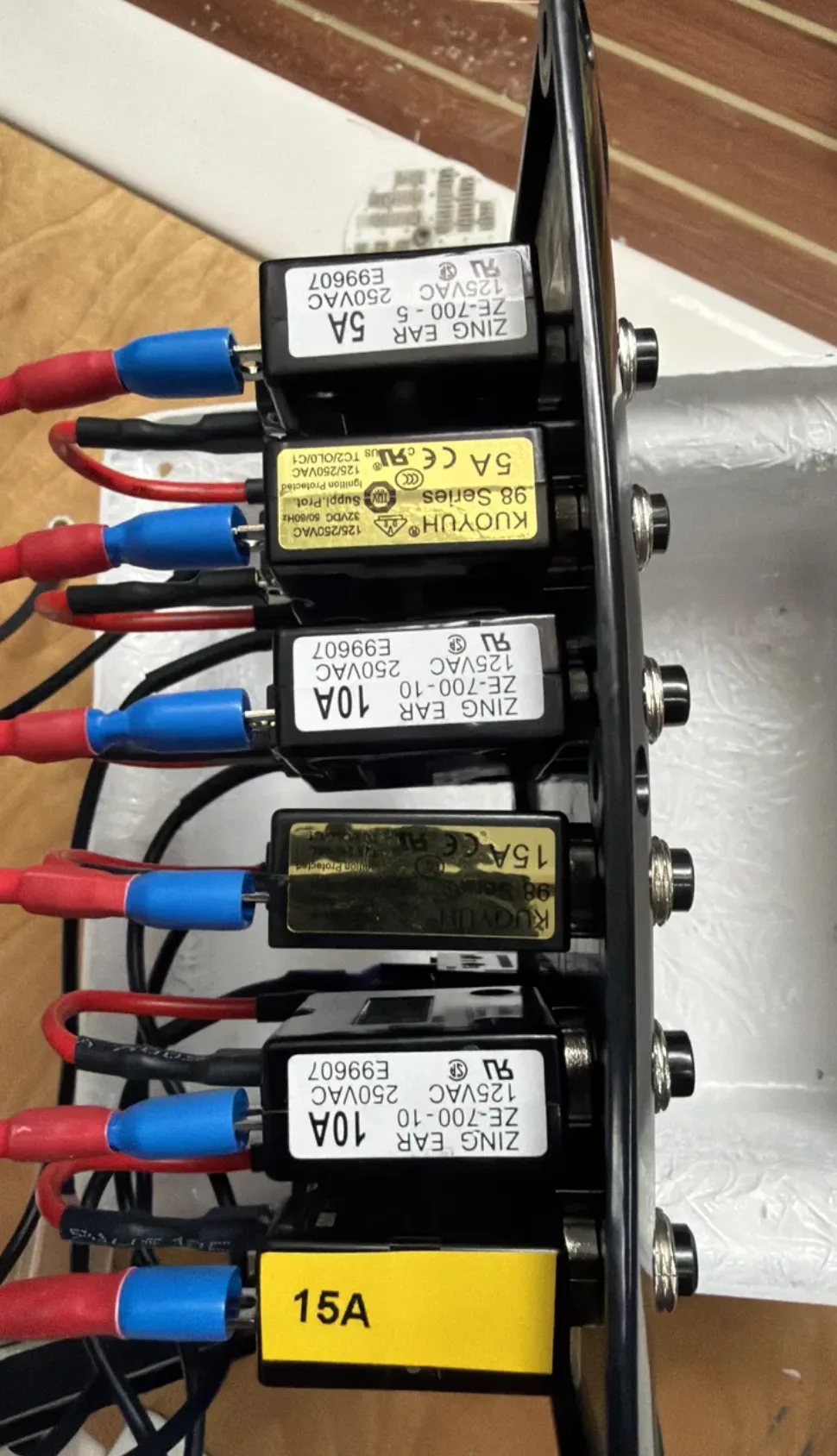
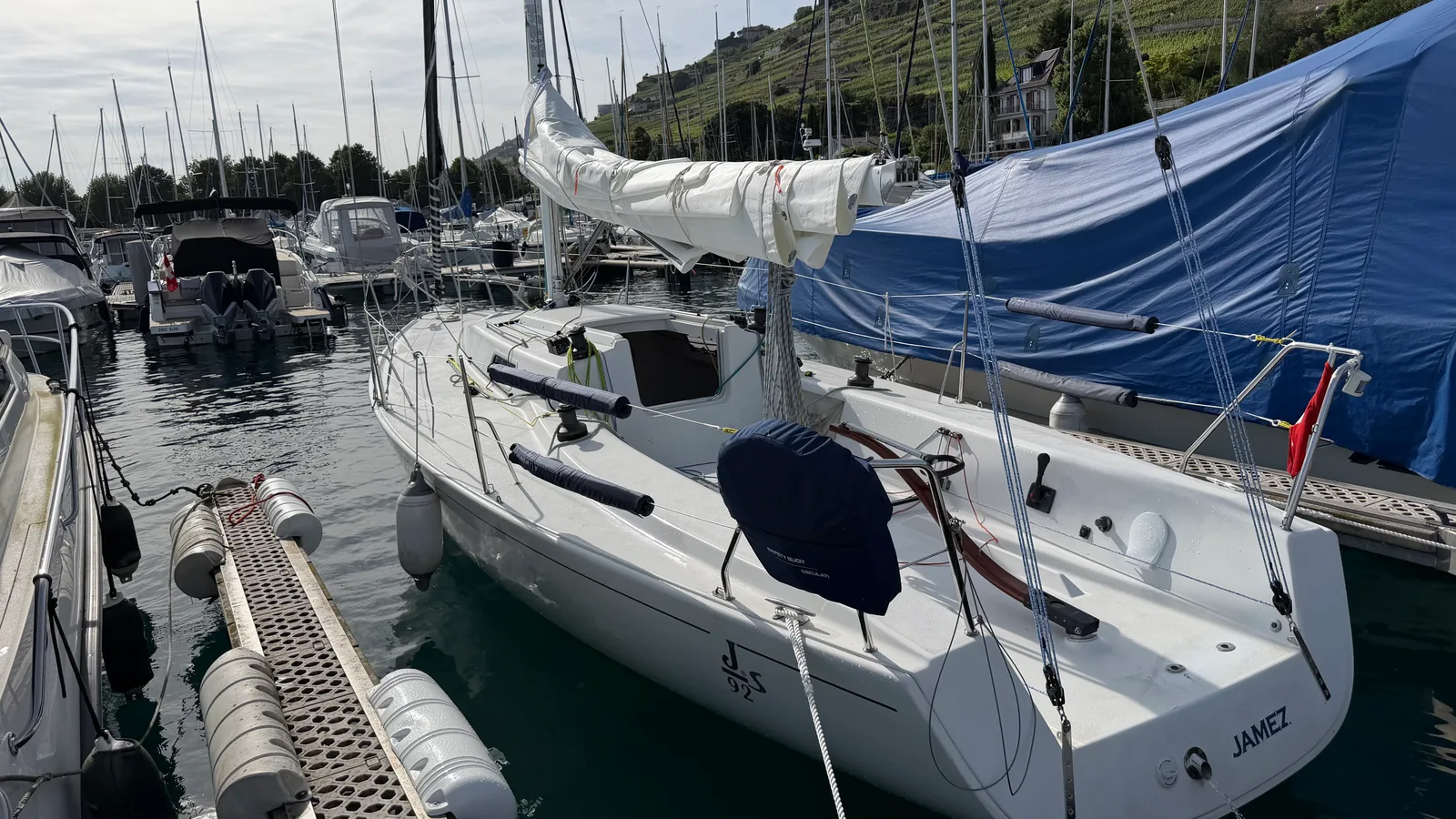
The right 12V breaker is the one that matches how the boat is actually used. On Jamais, a 2008 J/92s on Lake Geneva, the 2026 electrical refit forced two separate decisions: which control architecture to adopt, and which breaker brand to fit. This companion article walks through the reasoning — the full rebuild is covered in the pillar post on the 12V electrical refit.
Many modern marine panels use an integrated switch-breaker block: the same component both isolates the circuit daily and protects against overcurrent. It is compact, but it is a compromise.
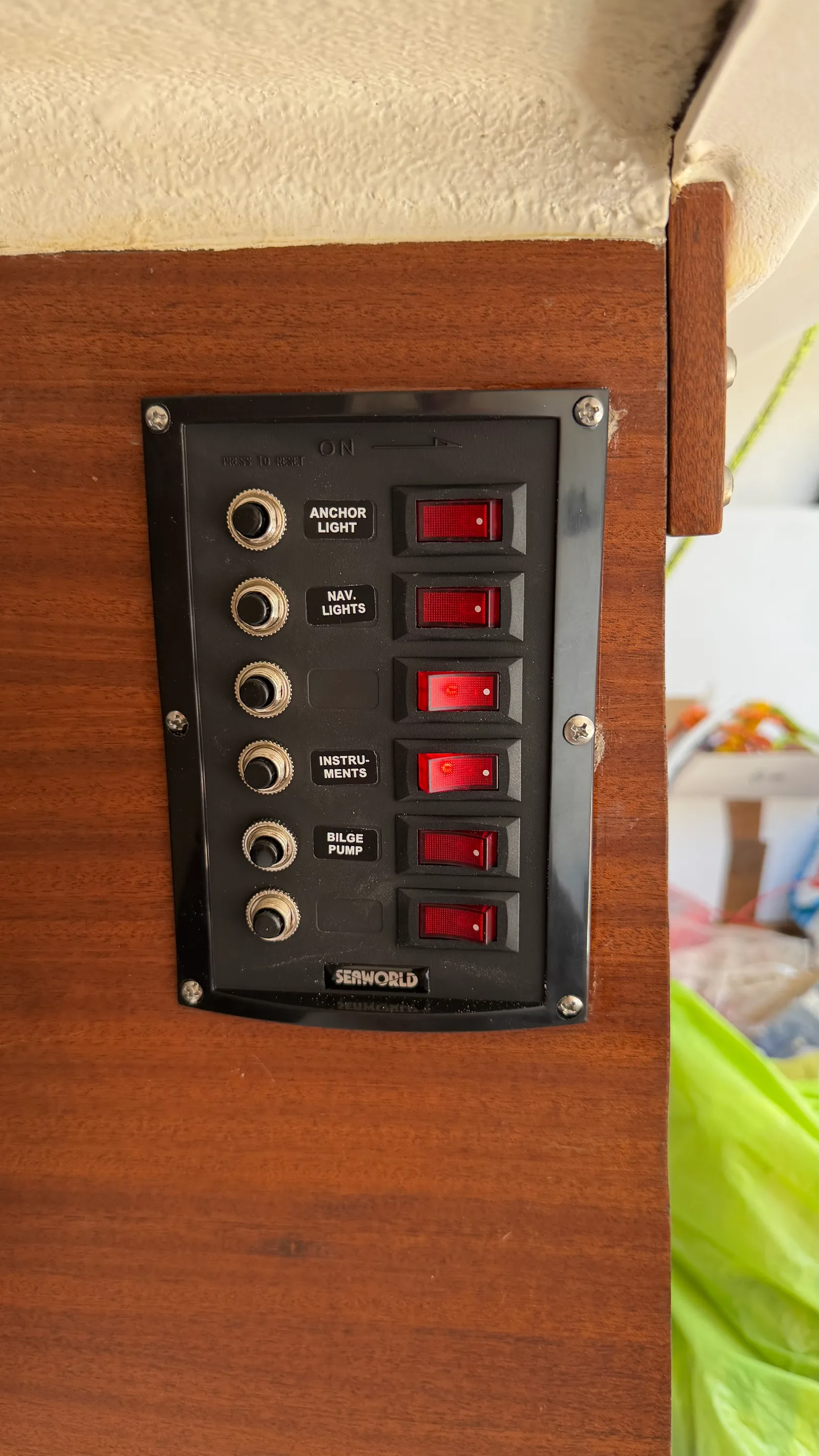
On Jamais, the original architecture separated the two functions: a breaker upstream, a rocker switch downstream. That separation was kept deliberately. The breaker is not consumed by daily cycling, because it is the rocker you operate to switch loads on and off. The breaker only trips on a genuine fault, which preserves its service life and its reliability at the moment it matters.
E-T-A is the reference in thermal marine breakers. The models suited to this kind of install cost roughly 112 CHF each. The equivalent Osculati auto-reset breakers cost roughly 16 CHF.
For a recreational lake sailboat, the gap is not justified. The decision: Osculati, with a spares strategy on board. The failure risk of an Osculati breaker is low, and a spare in the toolbox covers the rare case where one fails. Paying seven times the price for a reliability margin that will almost certainly never materialise in this context would be over-engineering.
The reasoning does not apply everywhere. On an offshore boat, far from anywhere, E-T-A earns its place. The principle is to calibrate cost to real criticality and to the available spares strategy — not to brand prestige.
The panel mixes two Taiwanese OEMs, both held in Osculati stock, both ignition-protected, 32 VDC, CE- and UL-certified:
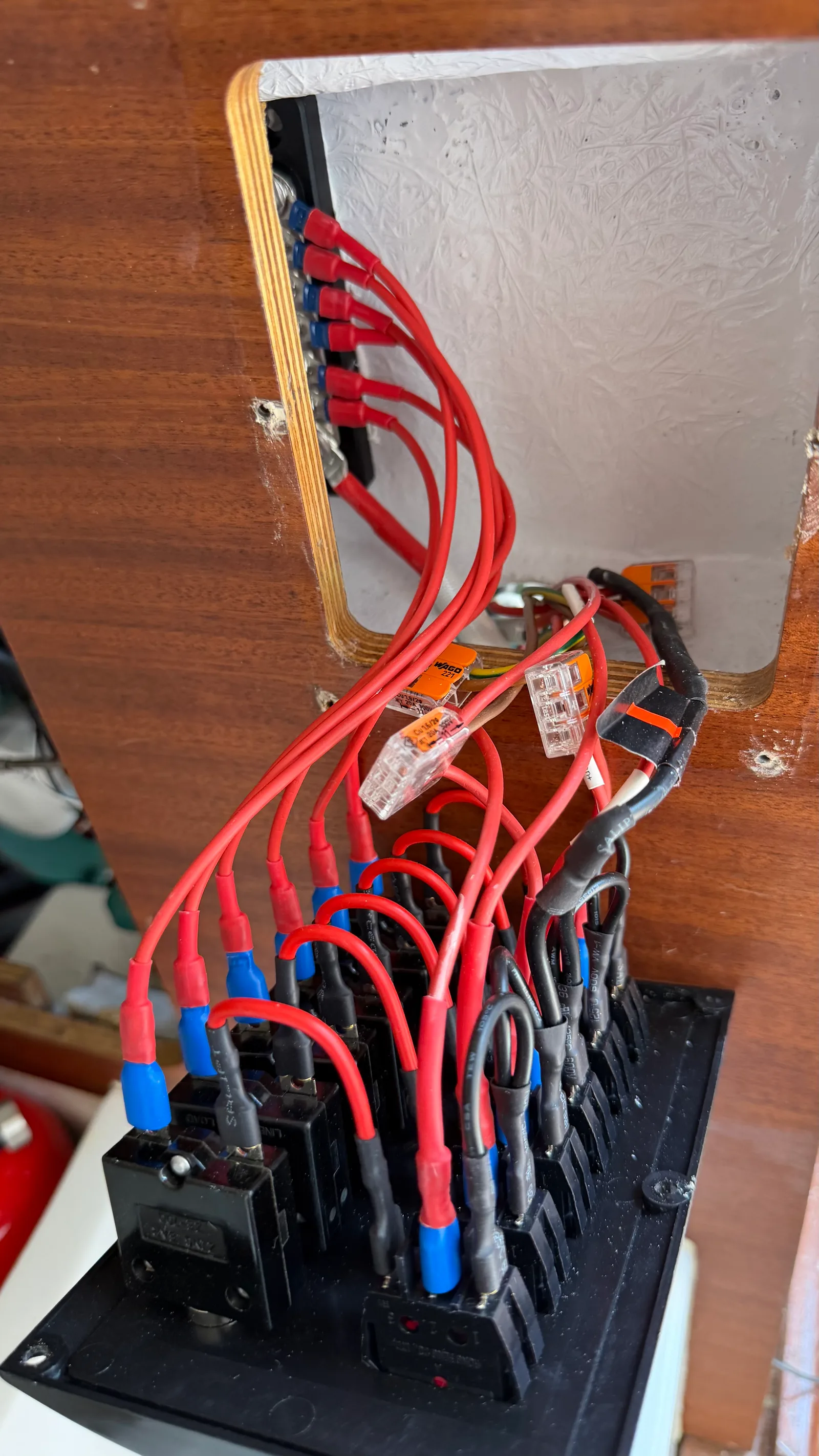
The two families are technically equivalent, so the mix simply follows what was in stock at the required amperages.
A breaker’s amperage protects the cable, not the load. It is sized just above the branch’s real current and below the capacity of the thinnest cable downstream.
Do you need E-T-A breakers on a sailboat? On an offshore boat they earn their place. On a recreational lake boat, Osculati auto-reset breakers with a spare on board cover the need at a fraction of the cost.
Is an integrated switch-breaker block a bad choice? Not bad, but less durable: the integrated breaker takes the daily cycling. Separating the two functions preserves the protection.
How do you choose a 12V breaker’s amperage? Just above the branch’s real current, and below the capacity of the thinnest cable downstream. The breaker protects the cable.
Companion to the pillar post on Jamais’s 12V electrical refit.
Rebuilding the 12V system on a J/92s to cut fire and failure risk: star topology, dedicated feeds, layered protection and clear labelling.

Rebuilding a J/92s cockpit: Spinlock XTS clutches and a Dyneema cascade vang for more power and a cleaner, more ergonomic deck layout.
Restoring a J/92s stern safety station: an Osculati horseshoe buoy kit, a straightened stanchion, and a re-welded stern-light plate.
Order your parts, or let’s talk through your programme first.