Systems 5 min read
Two bilge pumps, not one bigger one: the redundancy that matters
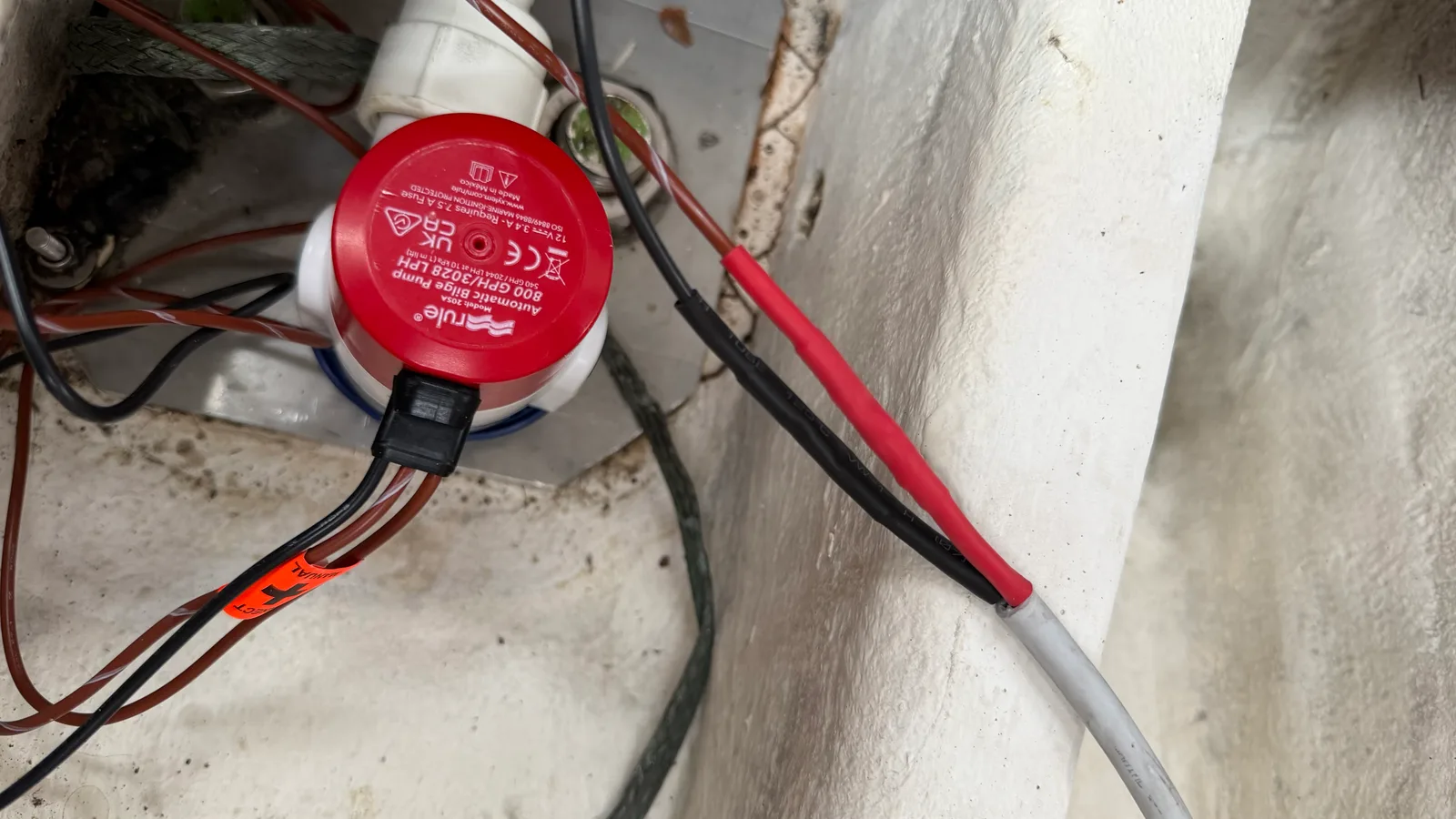
A manual and an automatic bilge pump on a J/92s: FP4 cockpit reinforcement, automatic float-switch operation, and a waterproof fuse holder.
Read next
Restoring a J/92s stern safety station: an Osculati horseshoe buoy kit, a straightened stanchion, and a re-welded stern-light plate.
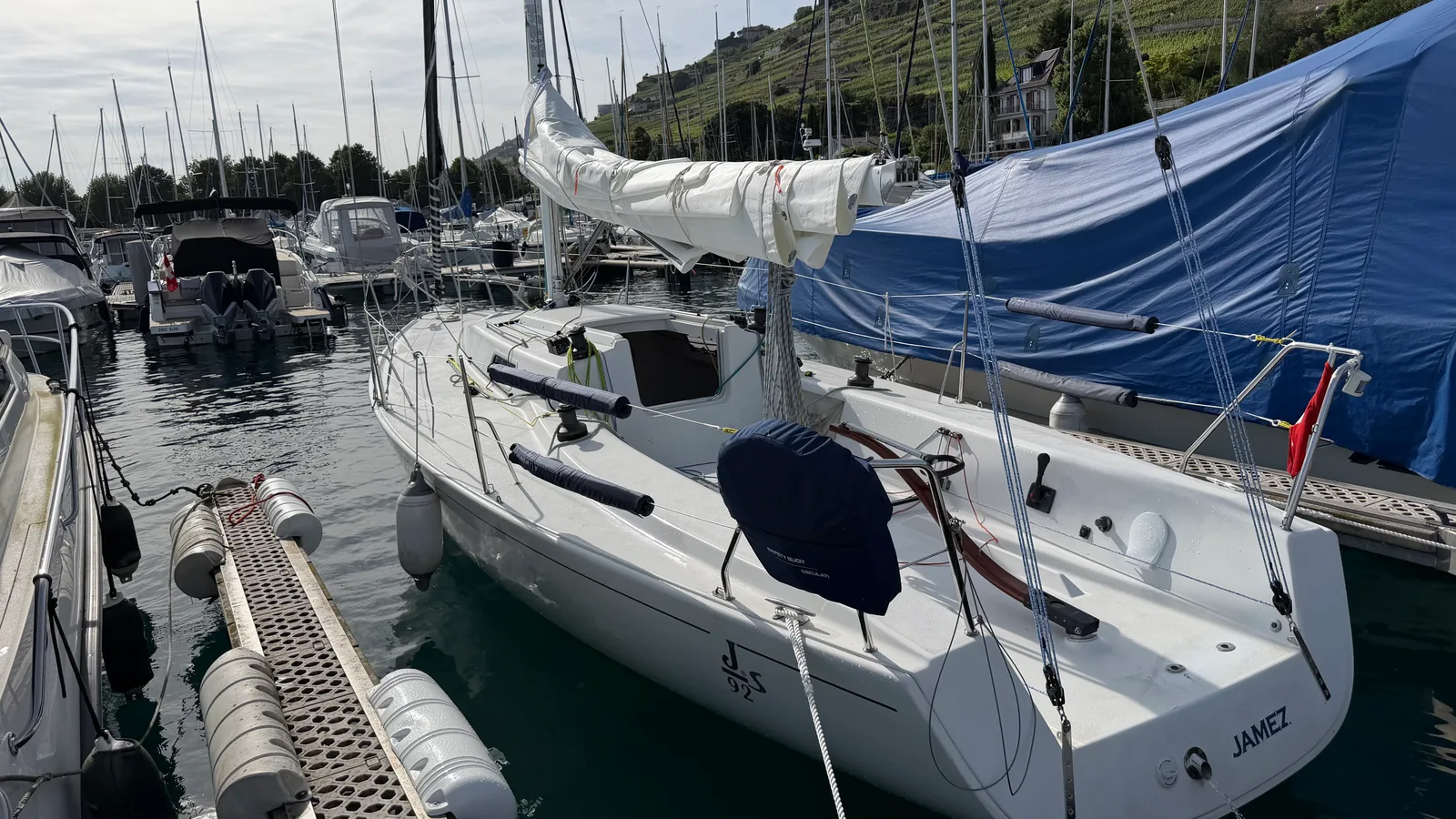
A sailboat’s stern is where safety concentrates: the buoy you throw, the last stanchion of the guardrail before you go over the side, the light that marks you at night. On Jamais, a 2008 J/92s on Lake Geneva, these three were taken on together — not as odd jobs, but as one station to set right.
The old buoy was at the end of its life; it was replaced with the Osculati horseshoe buoy kit. The point isn’t the buoy alone, but the whole set under a cover — and that’s what makes it a good buy.
The PVC/polyester cover straps to the stern rail and opens in one tear. It keeps everything tight: without it, the rescue line ends up trailing and tangling everywhere. It protects from the sun: line and buoy, permanently exposed, degrade under UV — under the cover, they last. And above all the kit is complete: inside are the Mini One LED light buoy and the regulatory floating line of 30 m (Ø 8 mm, 400 kg breaking load). One item, and buoy, light and line are all there, stowed and ready.
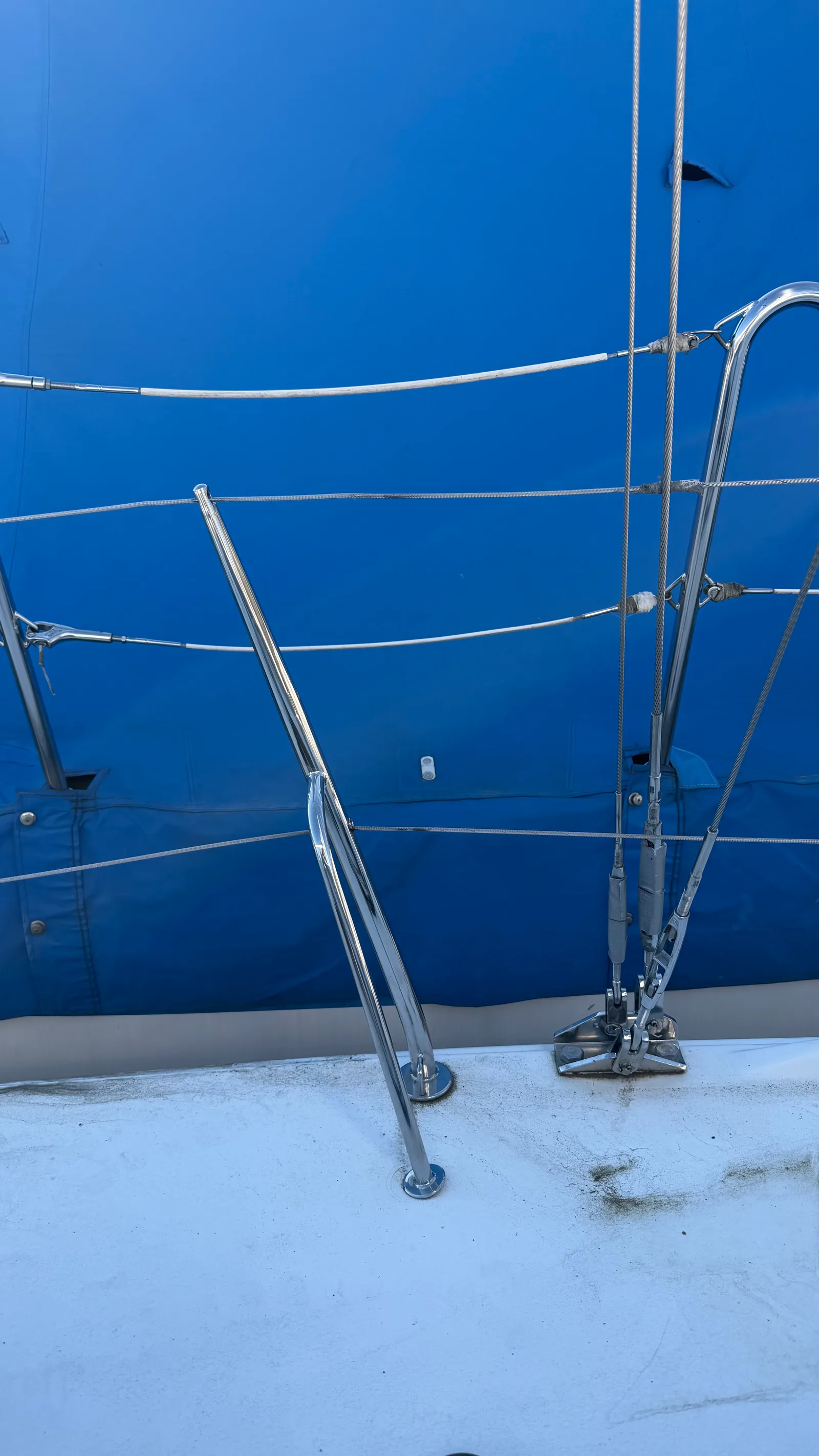
A bent stanchion means a weakened guardrail — and the guardrail is the last barrier before the water. This one was straightened rather than replaced: the tube was sound, the geometry recoverable, and a clean straightening restores the rail’s full integrity without changing a part. That’s the right call — repair what can be repaired, without compromising on the function.
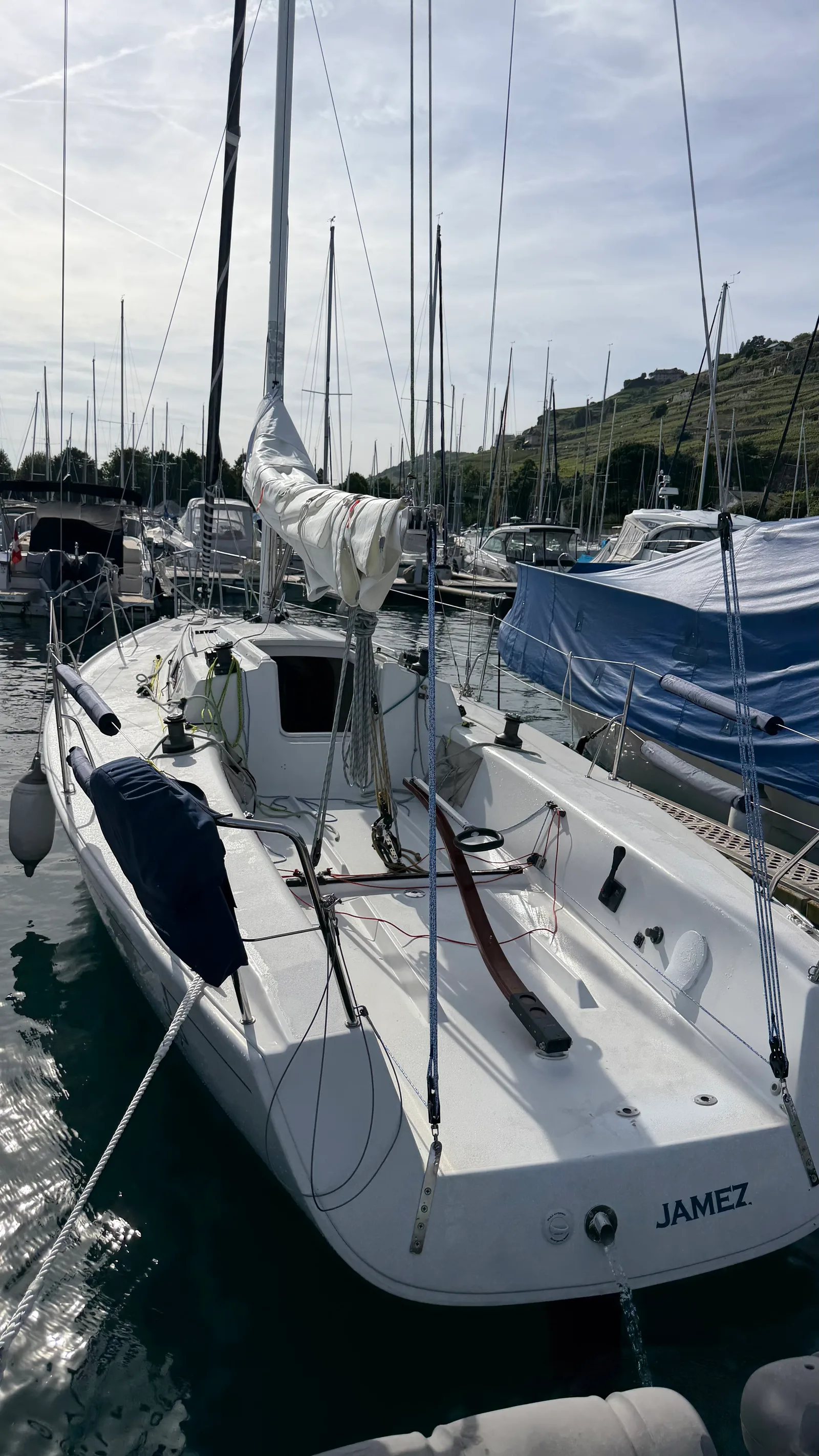
The stern light fixes to a small stainless plate on the transom. Its own needed attention: it was re-welded by Atelier Sanso, in Puidoux (see on the map), who does very good work. A clean stainless weld, and the light regains a sound, lasting mount — not a stopgap on a fatigued part.
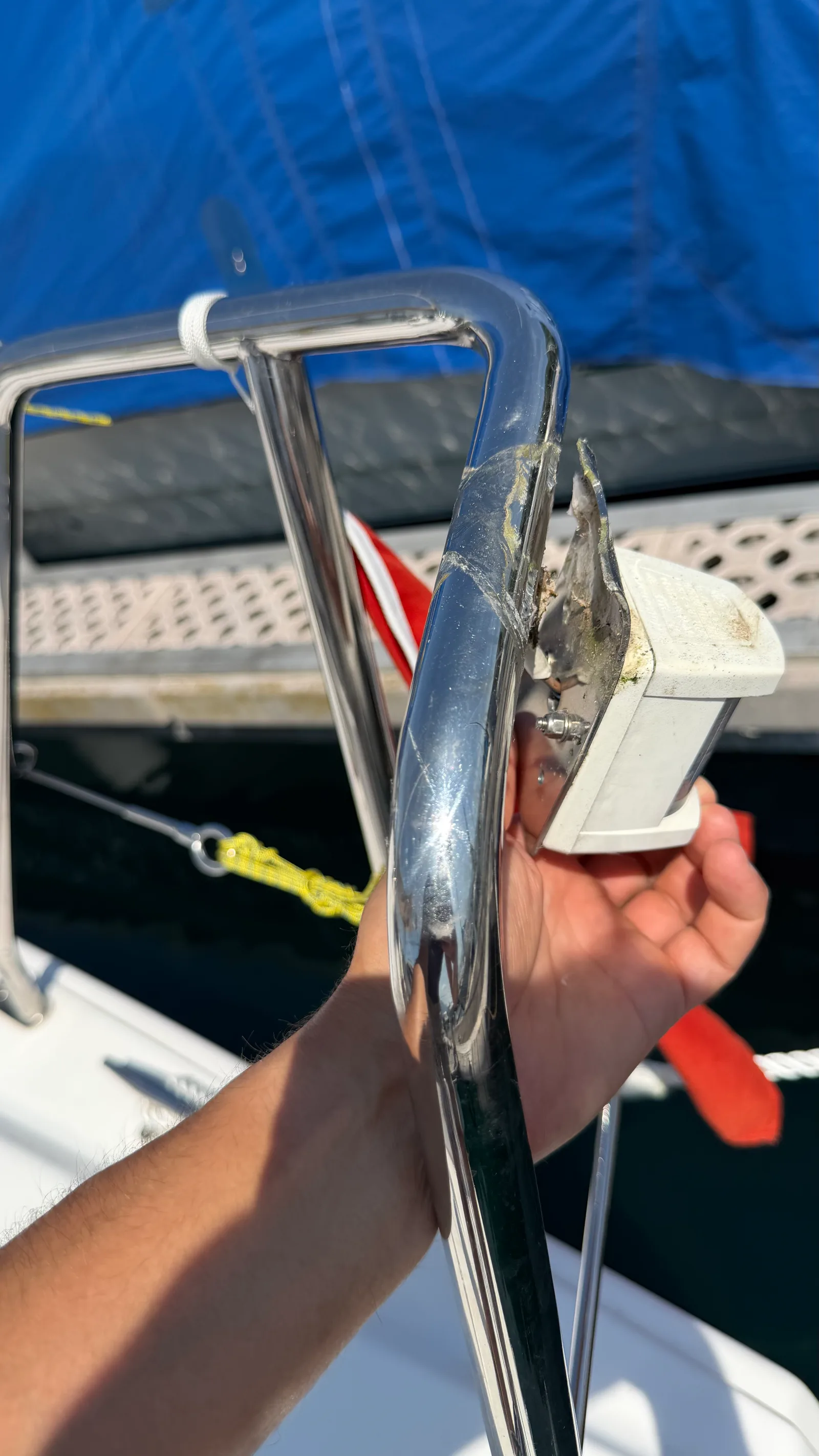
Taking the stern pulpit off to bring it to Sanso was also the chance to completely replace the stern light’s bipolar cable — the one that enters the pulpit through a hollow bolt and exits behind the plate. With the part already removed, it made sense to run a new cable rather than reconnect an old conductor: the kind of opportunity that doesn’t come twice. This replacement is part of the electrical refit carried out in parallel.
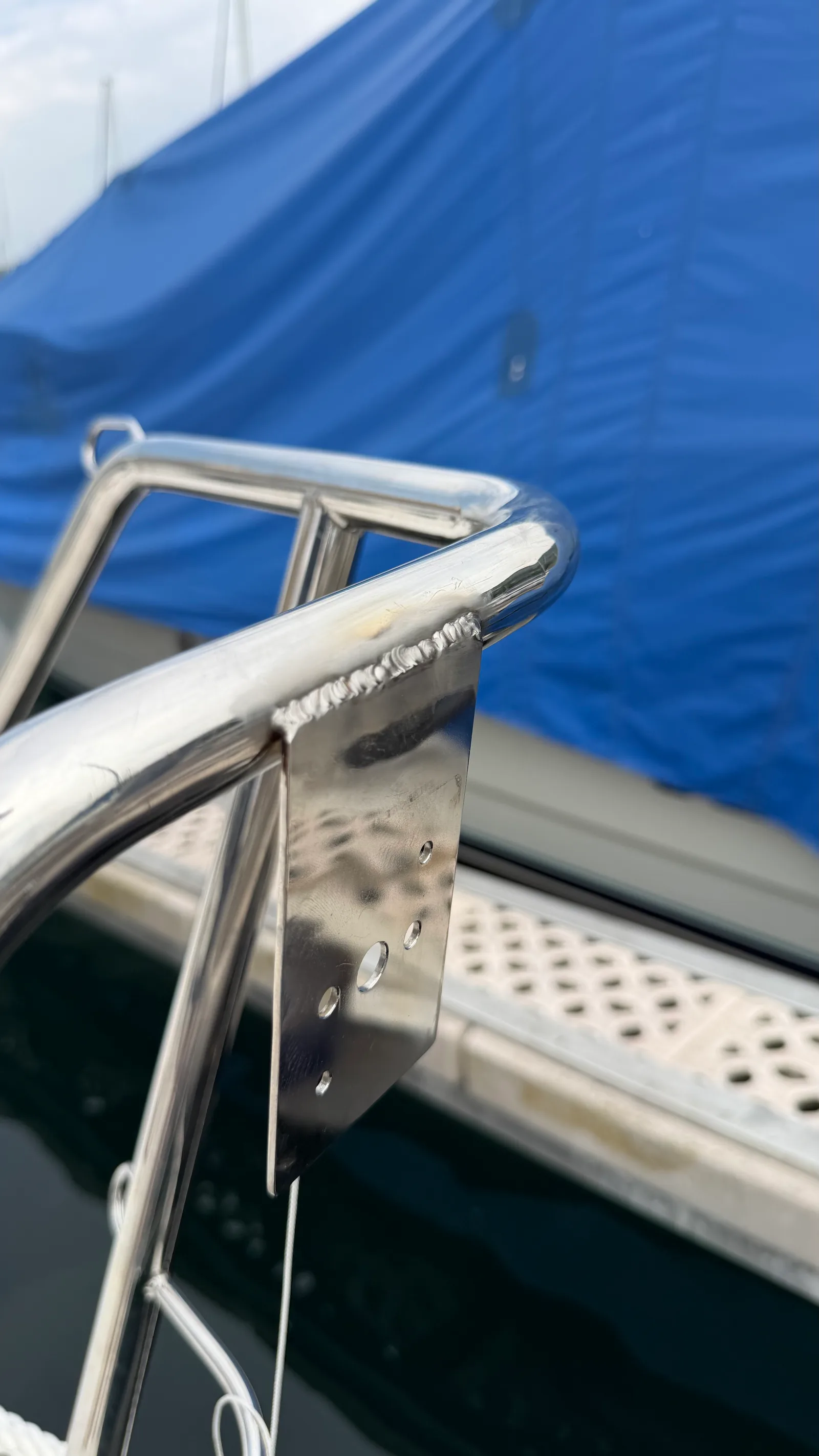
Three modest jobs, one logic: stern safety treated as a whole. The buoy marked and protected, the guardrail restored, the light back on a sound base. Nothing spectacular — just the part of the boat you hope never to use, set right for the day you might.
Why a horseshoe kit with a cover rather than a bare buoy? Because the cover keeps everything tight, protects line and buoy from the sun, and opens in one motion. The kit also brings the light and the 30 m line, stowed and ready.
How long is the rescue line? The kit’s regulatory line is 30 m, in Ø 8 mm floating rope, for a 400 kg breaking load.
Should a bent stanchion be replaced? Not necessarily. If the tube is sound and the geometry recoverable, a clean straightening restores the rail’s full integrity without changing the part.
Why have the stern-light plate re-welded? To remount the light on a sound, lasting base rather than a fatigued part. A clean stainless weld beats a stopgap.
This job is part of Jamais’s logbook. See also the emergency ladder that gets you back aboard.
A manual and an automatic bilge pump on a J/92s: FP4 cockpit reinforcement, automatic float-switch operation, and a waterproof fuse holder.
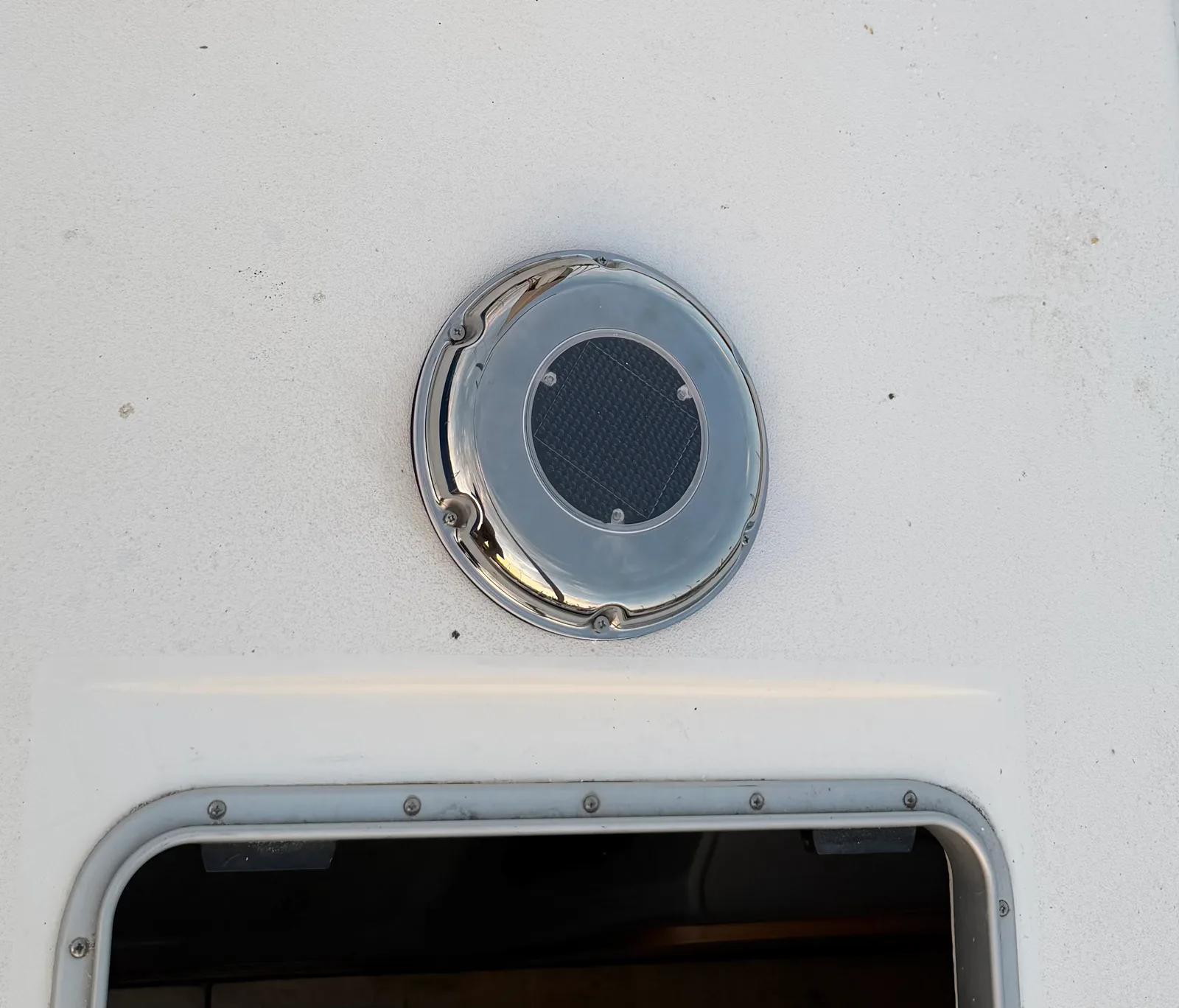
An autonomous solar vent on a J/92s: a low-to-high air circuit, 25 m³/h extraction with no drain on the batteries, and a mould-free interior.
Fitting an Osculati emergency ladder on a J/92s on Lake Geneva: why it's essential when sailing solo, and the FP4 reinforcement that stops it tearing a thin transom.
Order your parts, or let’s talk through your programme first.