
Hull 4 min read
Freshwater Sailboat Antifouling: Sanding to Thin Film Graphite
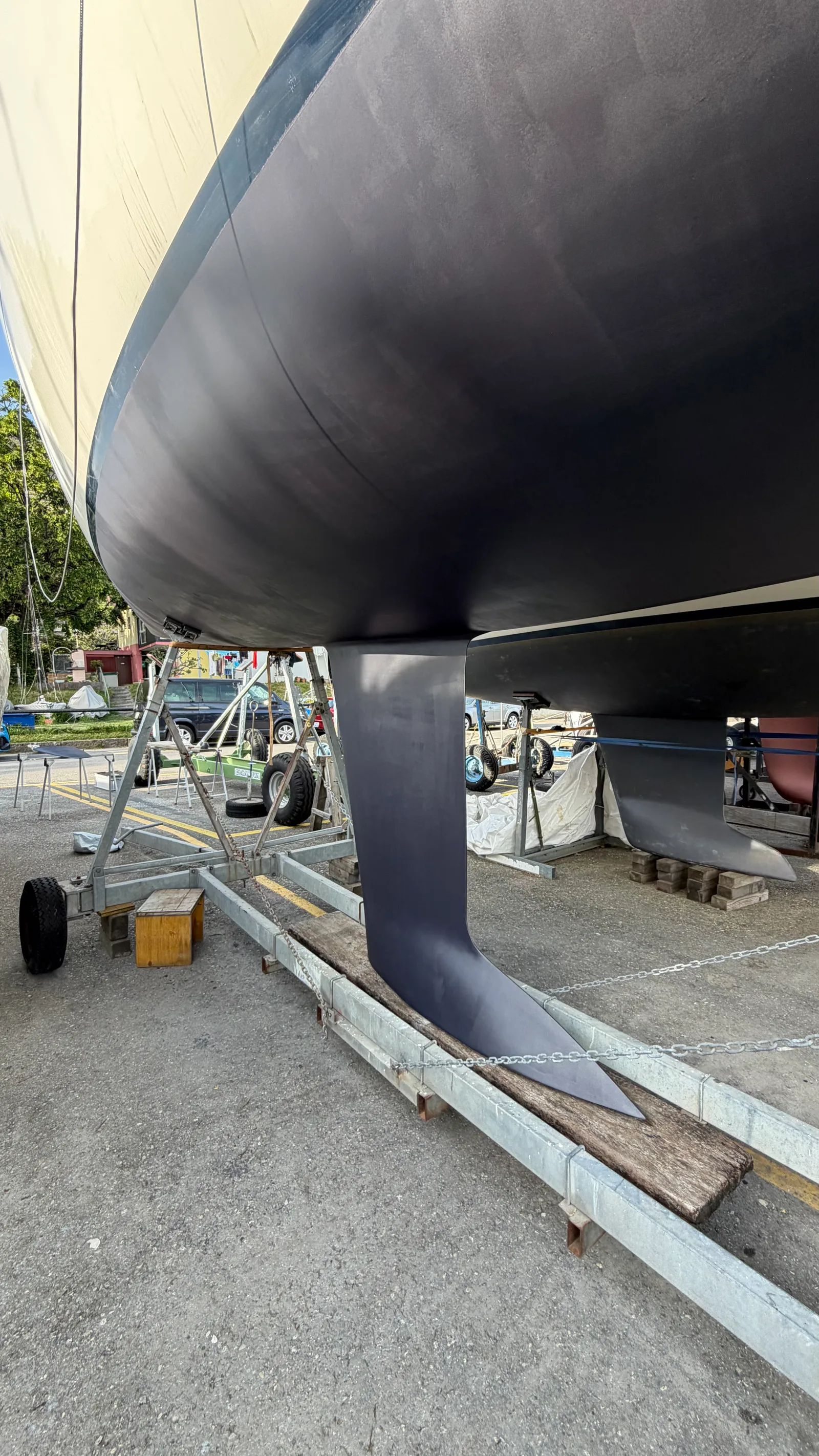
Renewing antifouling on a J/92s for Lake Geneva: sanding hull and appendages to a sound base, then three coats of hard graphite Thin Film.
Read next
Repairing cracked structural bulkheads on a J/92s with epoxy injection (West System Six10), a spray gelcoat finish, and a repainted bilge.
On a J/92s the interior bulkheads are laminated into the hull and deck to make the boat stiff — so a crack where a bulkhead’s plywood facing separates from the fibreglass is a structural matter, and the repair is to restore the bond. On Jamais, a 2007 J/92s at La Pichette on Lake Geneva, the two structural bulkheads either side of the companionway had cracked along the edge where their wood facing meets the moulding. This post covers how the crack was read, re-bonded and finished.
J Europe builds the J/92s interior from GRP and marine plywood, laminated into the hull and deck so the fittings add stiffness rather than only divide the space. The bulkheads flanking the companionway are part of that structure: a fibreglass bulkhead whose interior edge is finished with an L-shaped return flap, its aft face closed with a plywood panel finished like the rest of the interior.
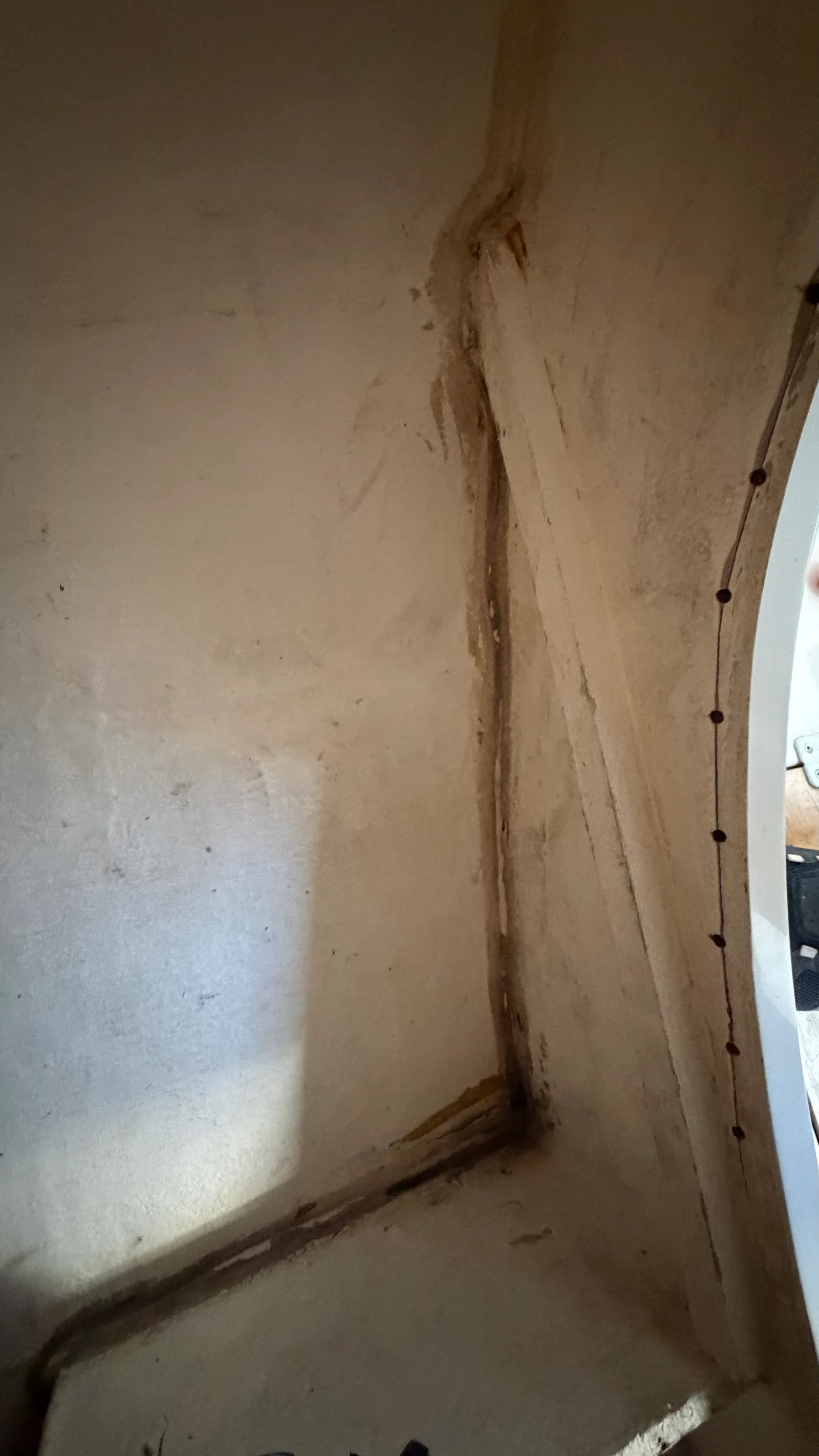
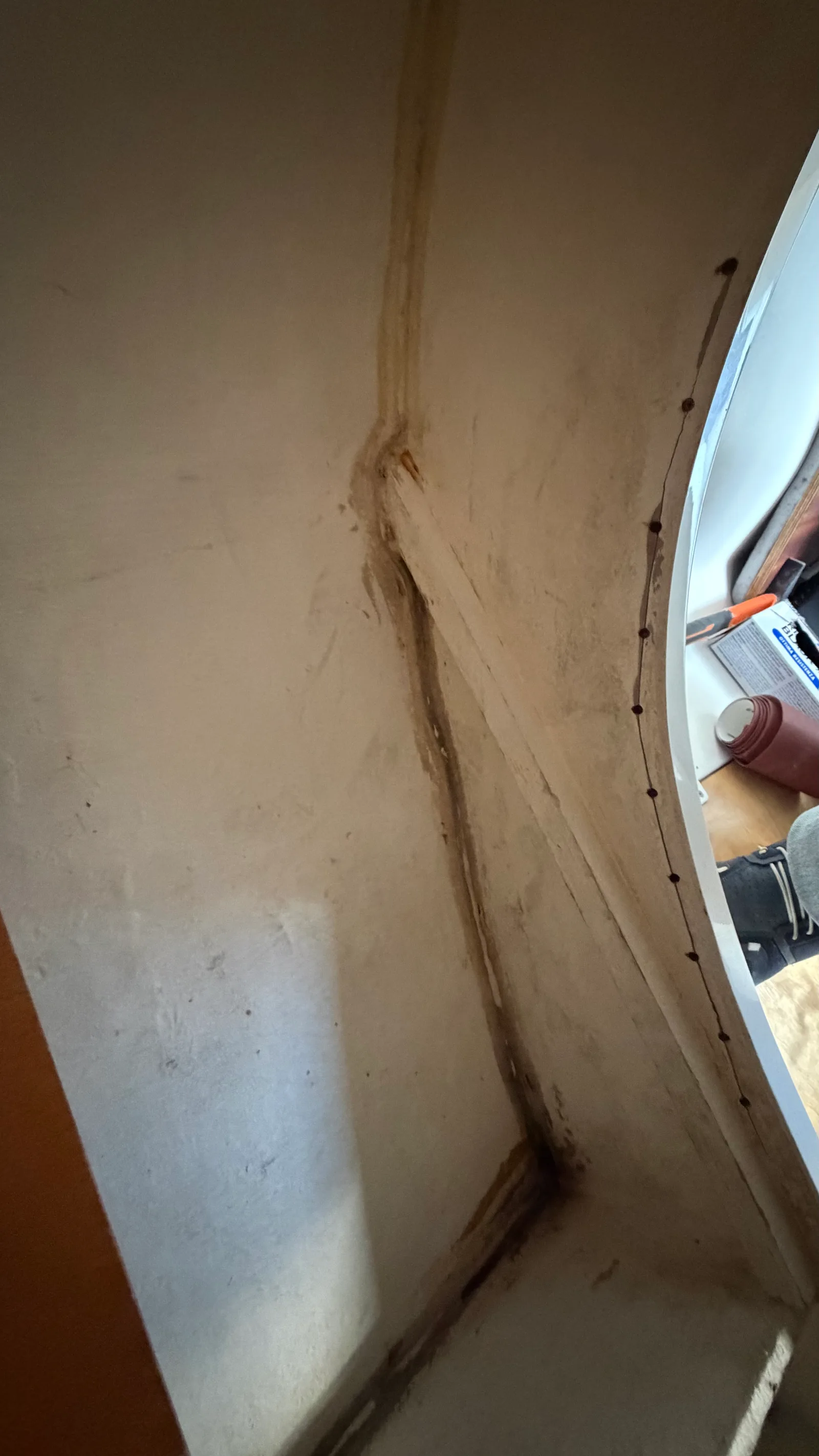
The crack ran along that edge, where the wood facing meets the fibreglass. The most likely reading is simple: the hull works. A fractional-rig performance boat flexes under rig tension and sailing loads, and years of that cyclic loading and unloading can fatigue the bond between a plywood facing and the moulding it is bonded to, opening a line along the panel edge. On Jamais that is exactly what had happened — the facing had begun to lift from the bulkhead, while the fibreglass itself was sound. So the job was not to fill a cosmetic line but to bond the panel back to the bulkhead and close the crack in the wood.
The repair was done by injection. A line of small holes was drilled along the crack — not to remove material, but to open pockets that reach through to the back of the wood facing. Those pockets do two things: they let resin flow behind the panel to re-bond it to the fibreglass, and they carry resin down between the two faces of the cracked wood.
Each hole was then filled with West System Six10, a pre-thickened two-part epoxy dispensed from a coaxial cartridge through a static mixing nozzle. It is thick enough not to run out of the hole, and fluid enough to wet the wood and creep behind the panel. Working hole by hole, each pocket was injected until it backfilled and resin appeared at the crack — the sign the void behind was full.
Once cured, the repair was faired back flush, sanding through decreasing grits: level the surface without digging into it, exactly as on any gelcoat repair.
The bulkhead faces on a J/92s are finished like the rest of the interior — white gelcoat or bilge enamel. To match, the repaired area was refinished with Osculati 65.520.11 white spray gelcoat, a single-component thick spray that levels surface porosity and leaves a satin white skin.
The finish does two jobs. It seals the repair, so moisture can no longer sit in the wood along the old crack — which is what matters structurally. That the bulkhead also looks like new again is a welcome result, but it is the sealed, sound panel that drives the choice.
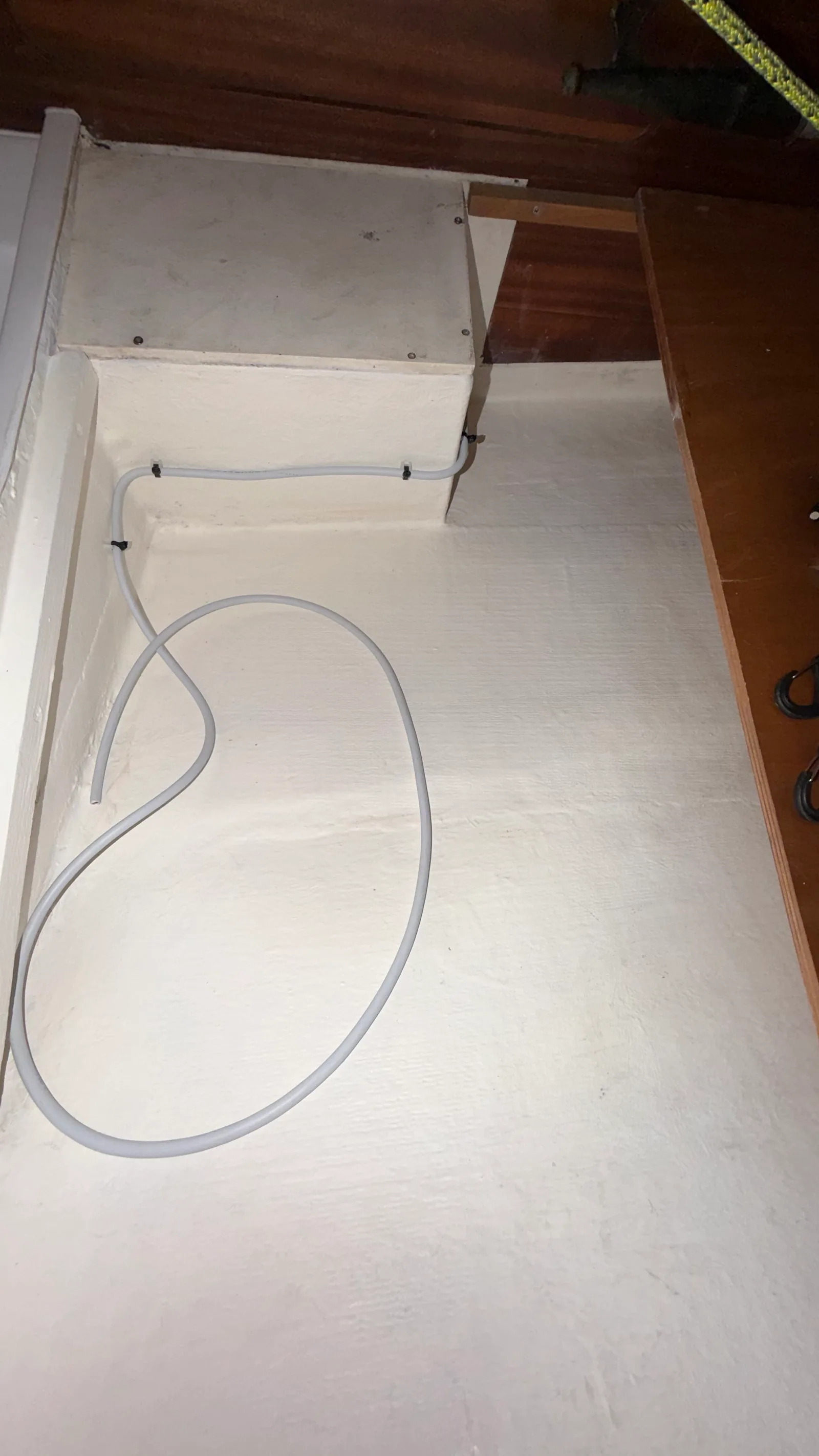
The port bulkhead area got a second pass later in the season. During the 12V electrical refit, the old two-conductor cable feeding the aft port-berth reading light was stripped out. With the cable gone and the surface exposed, the area was sanded and the old Sikaflex residue cleaned off with acetone.
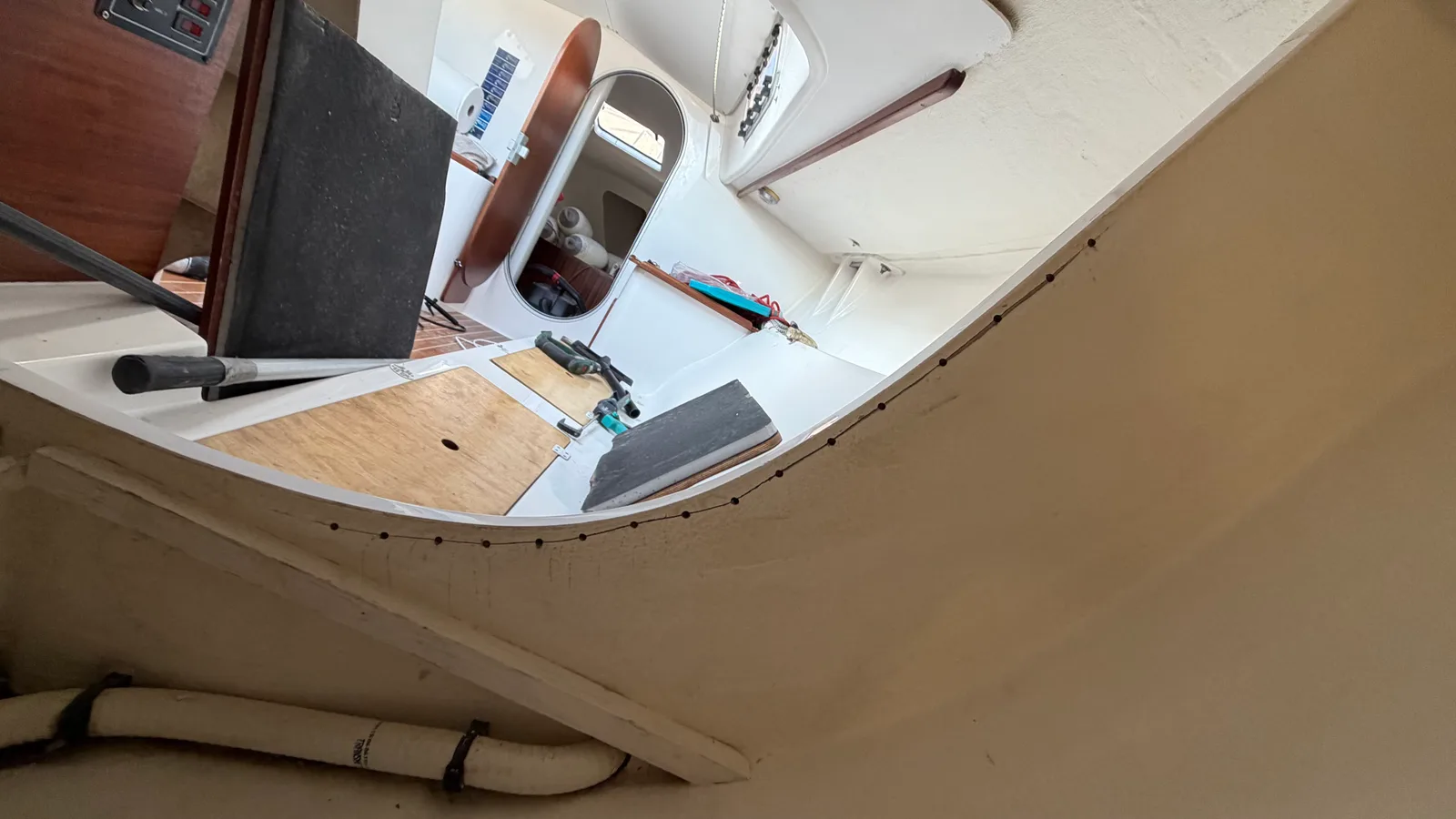
That opened the chance to refinish it properly. Rather than gelcoat, this area was repainted with Skipper’s Interno Scafi white bilge enamel — a single-component paint for interior hull surfaces, fast-drying and resistant to seawater, oil and fuel. The result is a clean, sealed white surface, ready for the new cable to be run against it. The wiring itself is covered in the 12V electrical refit.
Why do structural bulkheads crack on a sailboat? Most often because the hull works. Under rig tension and sailing loads a boat flexes, and years of that cyclic movement can fatigue the bond between a plywood facing and the fibreglass it is laminated to, opening a crack along the panel edge. The laminate can be perfectly sound while the bonded joint has let go.
Can you repair a cracked bulkhead by epoxy injection? Yes, when the fibreglass is sound and only the facing has separated. Drilling a line of holes along the crack opens pockets to reach behind the panel; a pre-thickened epoxy injected into them re-bonds the facing and fills the wood, restoring the joint rather than only hiding the line.
Why finish with spray gelcoat instead of paint? On a bulkhead face finished in gelcoat, a single-component spray gelcoat matches the original skin and seals the repair against moisture. Where the surface was originally bilge enamel — as on the port side here — a bilge paint is the matching, correct finish.
What paint is used in a boat bilge? A single-component bilge enamel made for interior hull surfaces, resistant to seawater, oil and fuel. On Jamais that was Skipper’s Interno Scafi in white; it dries fast and gives a clean, easily inspected surface.
This job is part of Jamais’s logbook. See also the gelcoat repair of the bow and port topside and the 12V electrical refit.
Renewing antifouling on a J/92s for Lake Geneva: sanding hull and appendages to a sound base, then three coats of hard graphite Thin Film.
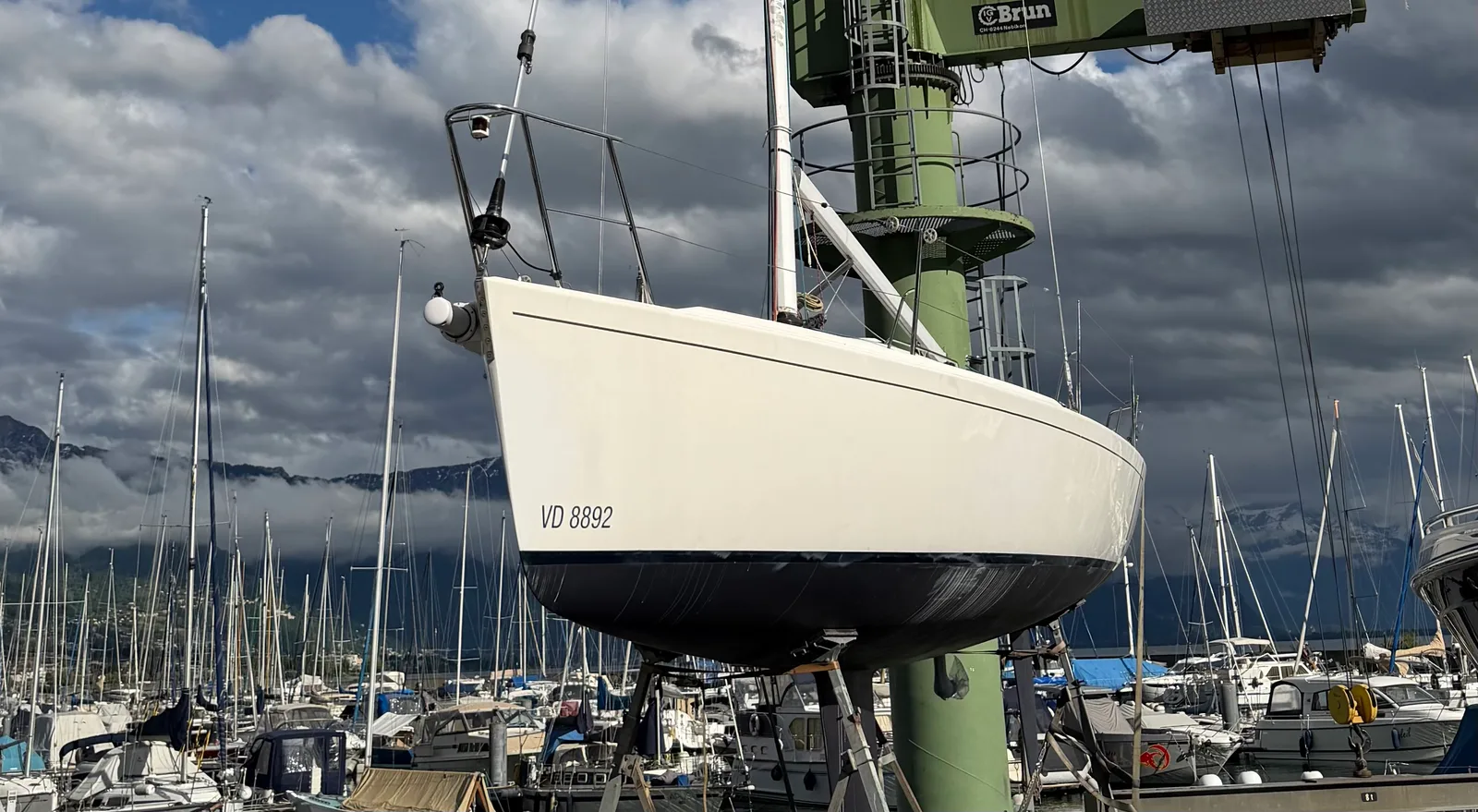
Repairing a chipped bow and scratched port topside on a J/92s: two-component gelcoat, progressive sanding, spray finish and polishing to a bright, even hull.
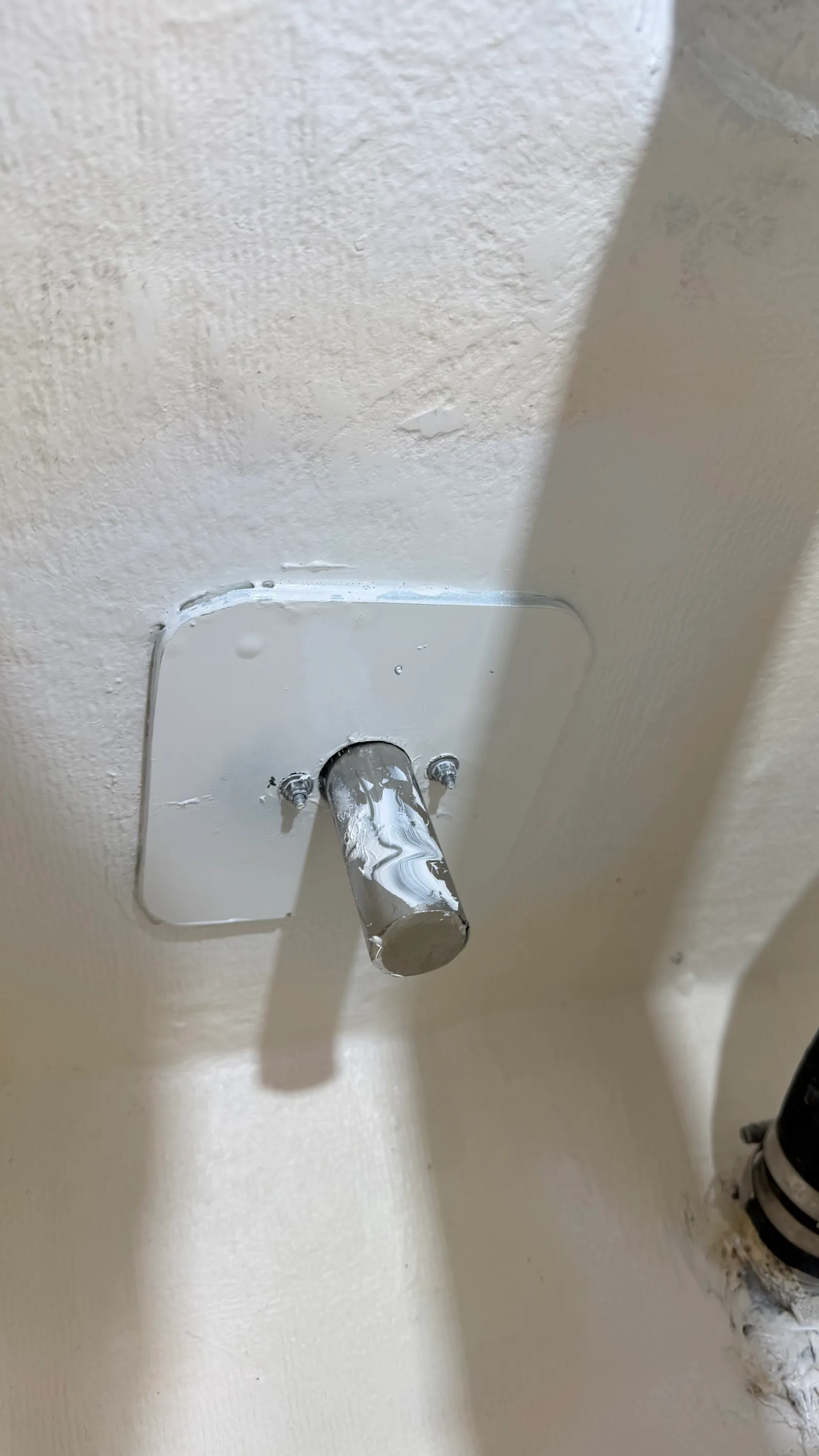
Repositioning leaking swim-ladder sockets on a J/92s: FP4-filled holes, bonded backing plates, and a rebuilt, watertight cockpit floor.
Order your parts, or let’s talk through your programme first.