Rigging 5 min read
Refitting a J/92s cockpit: XTS clutches and a cascade vang
Rebuilding a J/92s cockpit: Spinlock XTS clutches and a Dyneema cascade vang for more power and a cleaner, more ergonomic deck layout.
Read next
On a J/92s, a risen mast chock was a structural risk. Resetting it meant dropping all tension and redoing rake, centring and tensions.
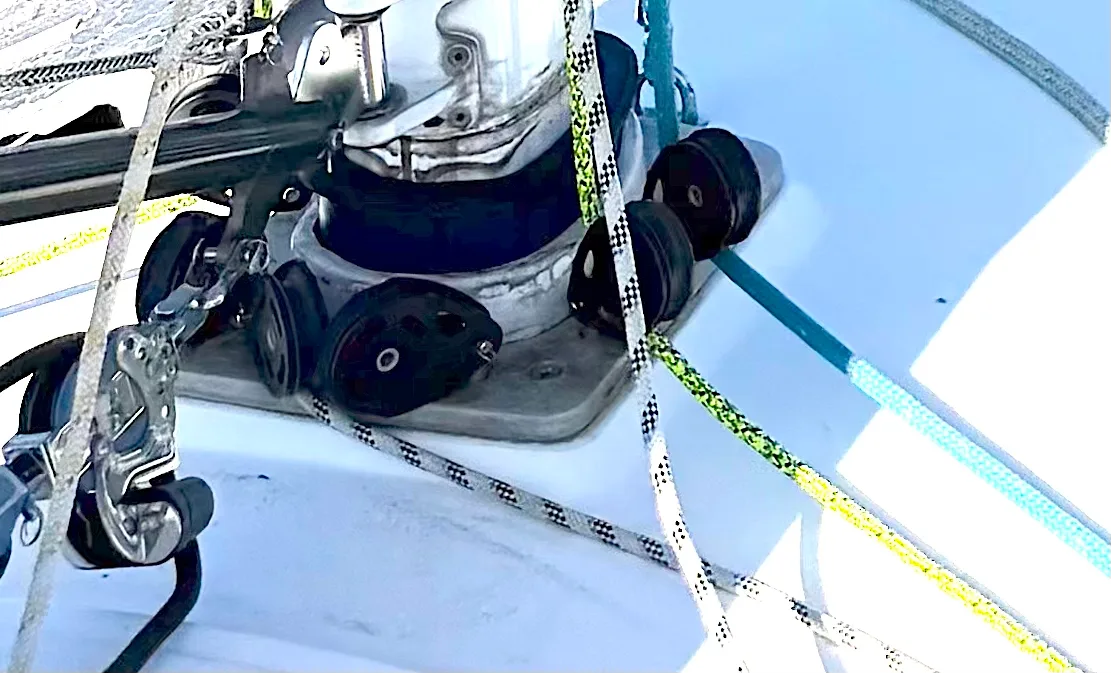
Tuning Jamais’s rig didn’t start as a tuning job — it started with a structural problem at the deck partners. On this 2008 J/92s on Lake Geneva, the chock that centres the mast had crept up, and resetting it meant dropping all the rig tension. With the mast unloaded, it was the moment to redo the whole tune. Two jobs joined by a single move.
I found the boat with the rigid chock — the hard plastic wedge that centres the mast at the deck partners — risen by more than 50%. The consequence is structural: the mast’s compression, instead of spreading over the full thickness of the deck, was concentrating on about 1 cm of edge where the plastic met the deck. That is exactly the condition that, over time, opens structural cracks around the partners.
On top of that, the old waterproofing boot (probably silicone — it hardly matters) was completely sun-cooked and detached: water free to run down the mast.
To reposition the rigid chock you must take all the tension out of the rig: only with the mast unloaded can the chock drop back and bear on the full deck thickness, as it should. Once reseated, the waterproofing was remade with a self-amalgamating tape wrapped around the mast base — the Osculati mast-collar tape — which seals without bonding permanently and can be redone when needed.
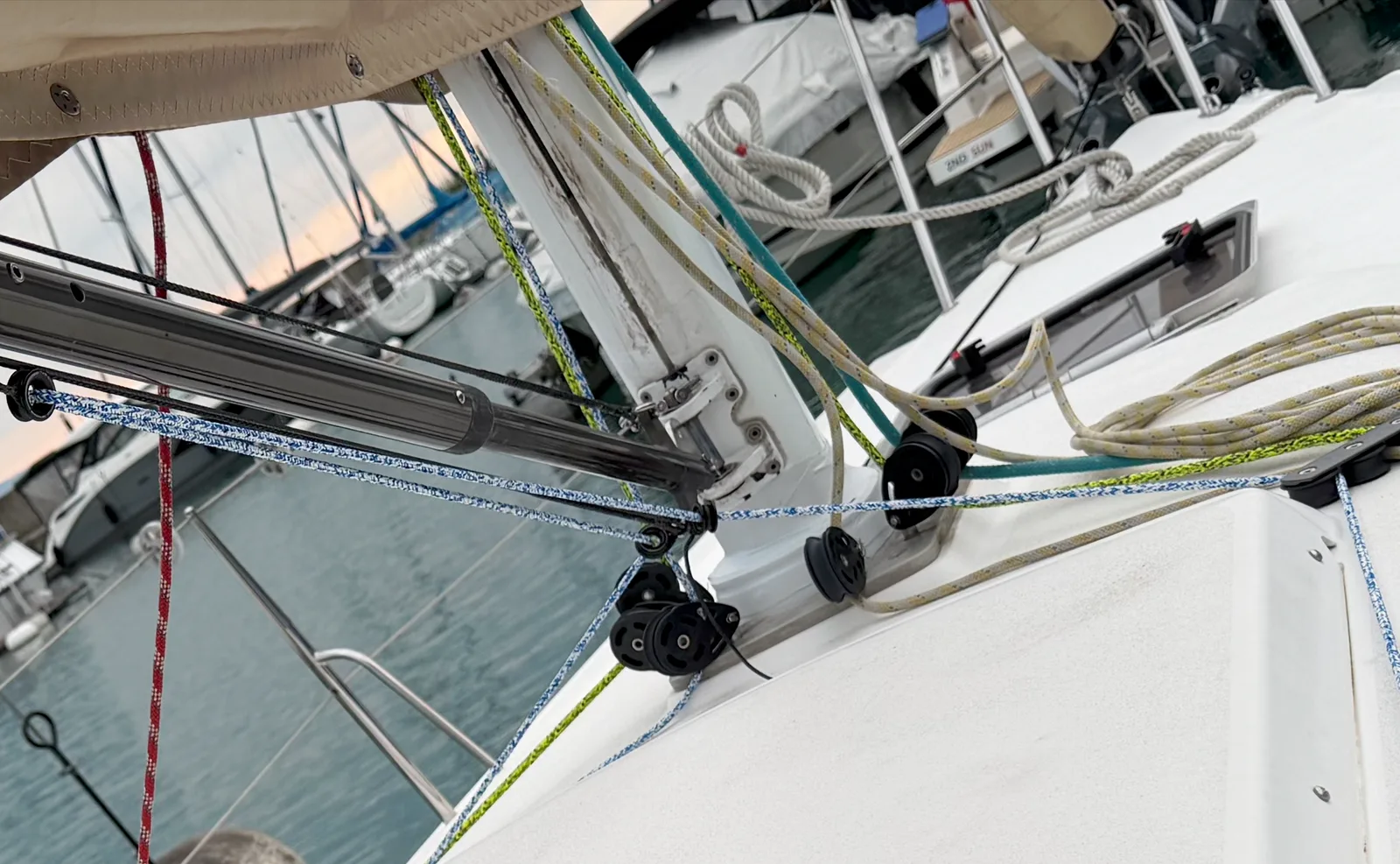
Result of this first part: the risk of cracking the deck is gone.
With the rig slack, it was the right time to redo rake, centring and tensions, using the Elvstrøm tuning guide as the reference.
On a J/92s, rake isn’t measured with a tape from the deck, but along the forestay wire with the genoa halyard:
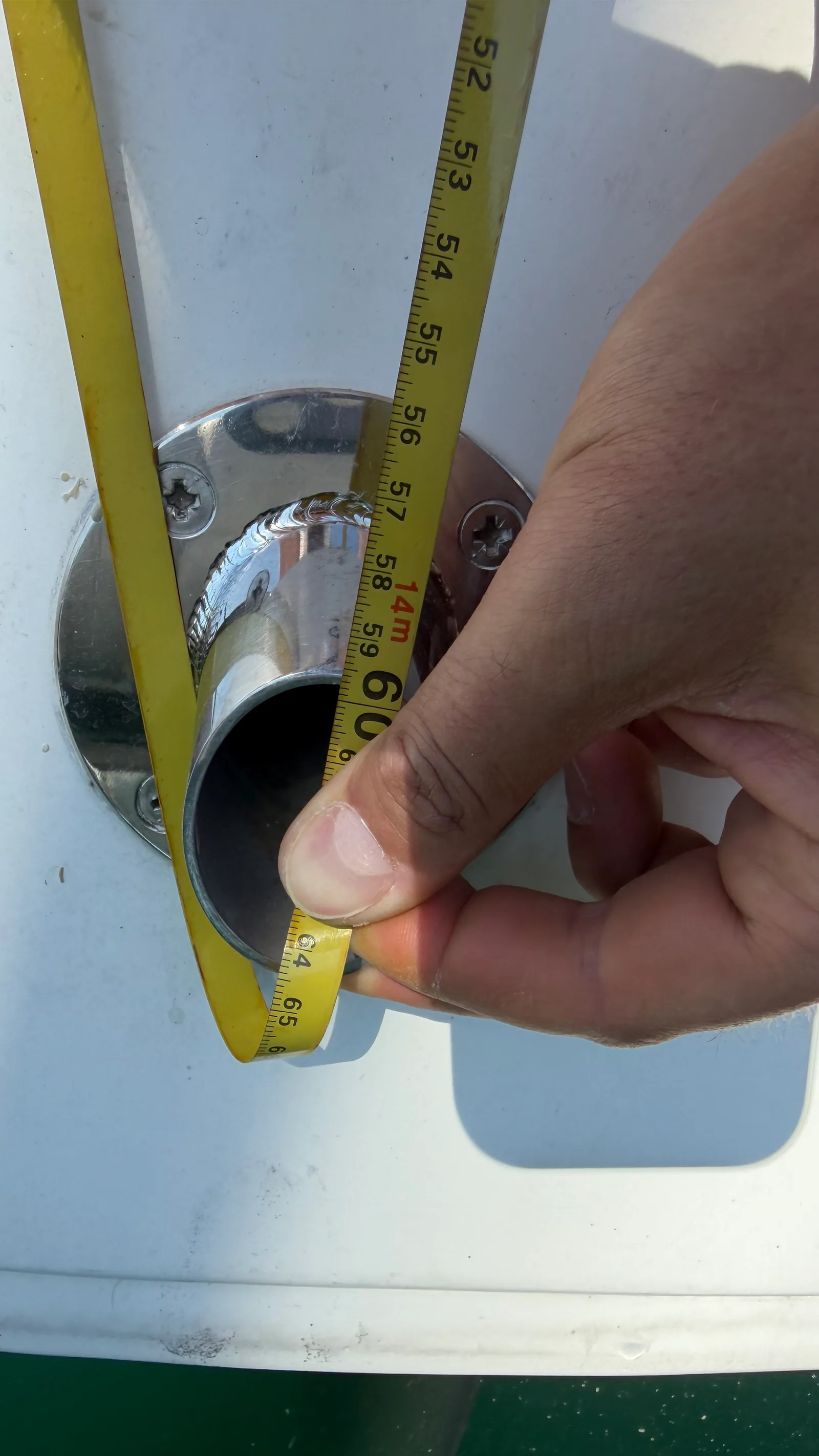
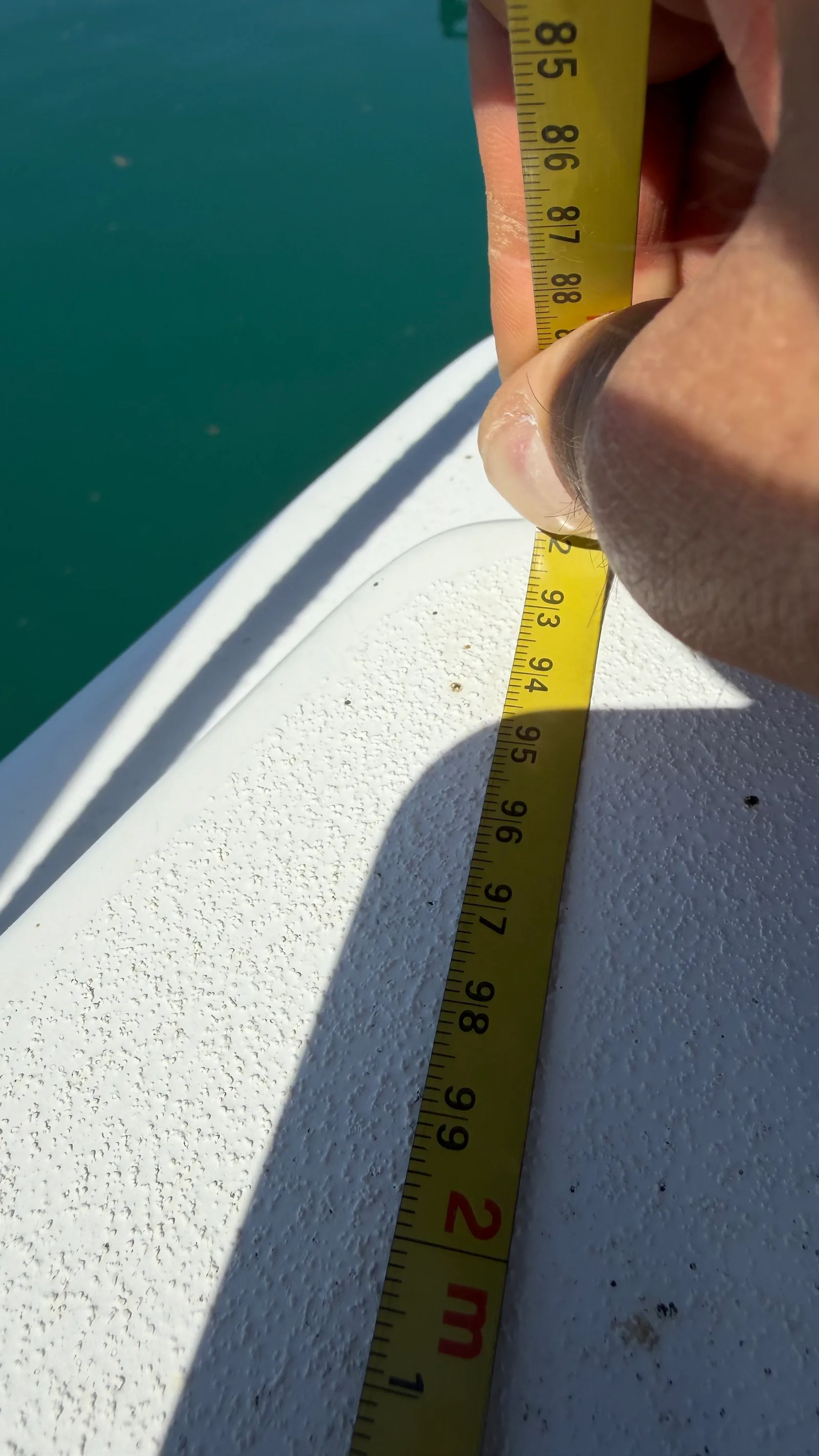
The guide’s numbers — 1.95 / 1.92 / 1.90 m for light / base / heavy — are that measurement, not the forestay length. A smaller number means more rake and more forestay tension.
On an enclosed body of water like Lake Geneva, the base setting covers most outings; you only go to heavy on genuinely windy days.
Rake sets the fore-and-aft; centring sets the athwartships. With a tape on a halyard I measured down to each chainplate — port and starboard equal means the masthead is centred side to side — and to a point at the stern, to confirm the masthead sits on the centreline. Only when both checks agree is the mast truly in column.
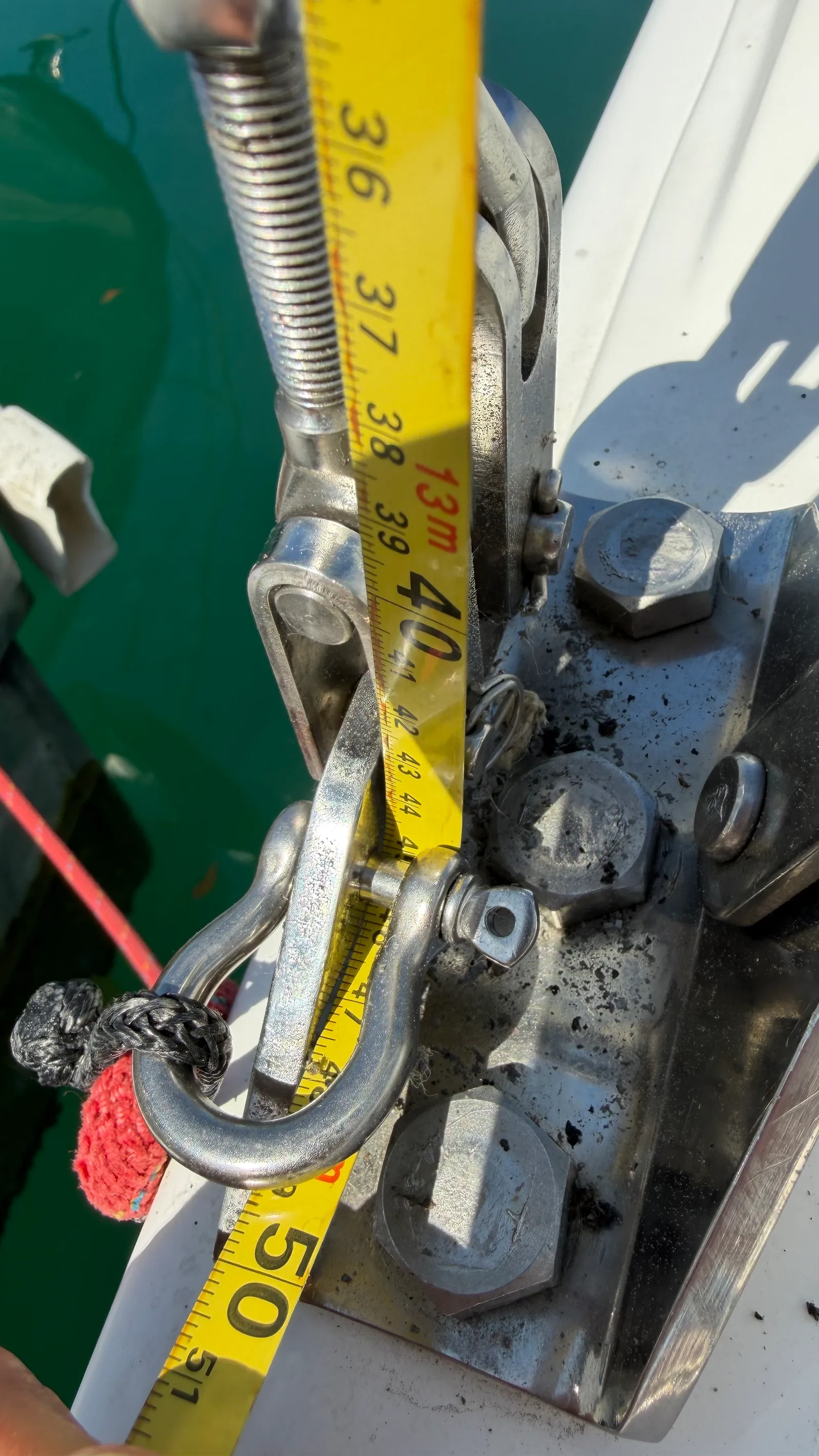
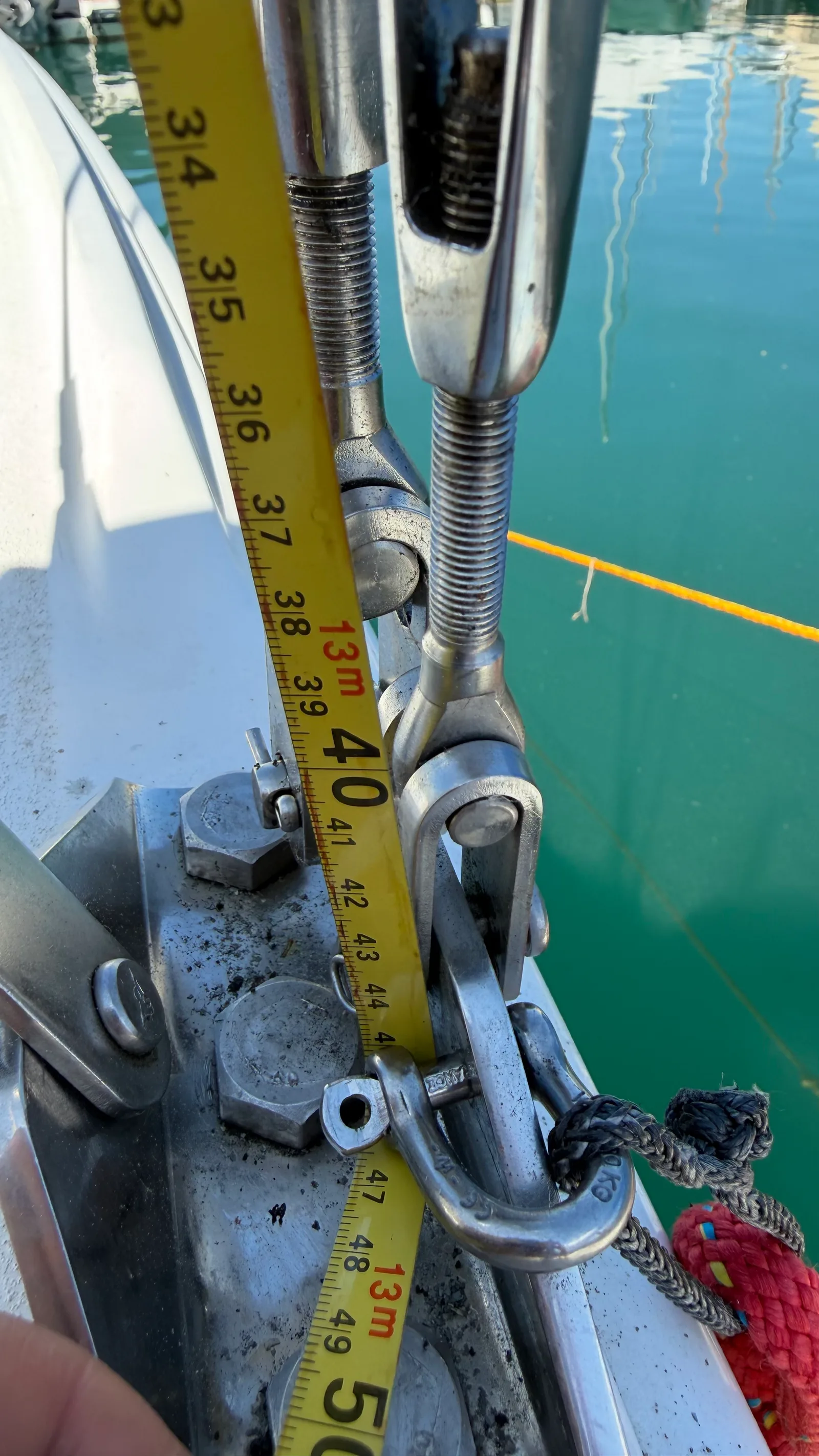
The J/92s has two sets of swept spreaders. The guide gives Loos PT-2M relative values, not absolute loads: roughly 35 for the caps, 17 for the D1 lowers, 15 for the D2 intermediates at base. Two warnings: there are no published absolute figures specific to the J/92s, and the boat is rigged in Dyform wire, which at the same Loos reading develops a higher actual load than 1×19. Measure with halyards slack and no backstay on.
Result of this second part: the mast is well centred and tuned.
Why is a risen mast chock a problem? Because it concentrates the mast’s compression on a thin strip of deck instead of its full thickness, risking cracks around the partners over time.
How do you measure rake on a J/92s? With the genoa halyard locked level with the gooseneck, swung to the forestay and marked, then measured along the wire to the deck fitting.
How do you centre the mast? By measuring with a halyard down to both chainplates (equal = centred side to side) and to a point at the stern (masthead on the centreline).
What instrument for the tensions? The Loos PT-2M gauge is the one specified for the J/92s relative readings.
This job is part of Jamais’s logbook. See also choosing Marlow halyards.
Rebuilding a J/92s cockpit: Spinlock XTS clutches and a Dyneema cascade vang for more power and a cleaner, more ergonomic deck layout.
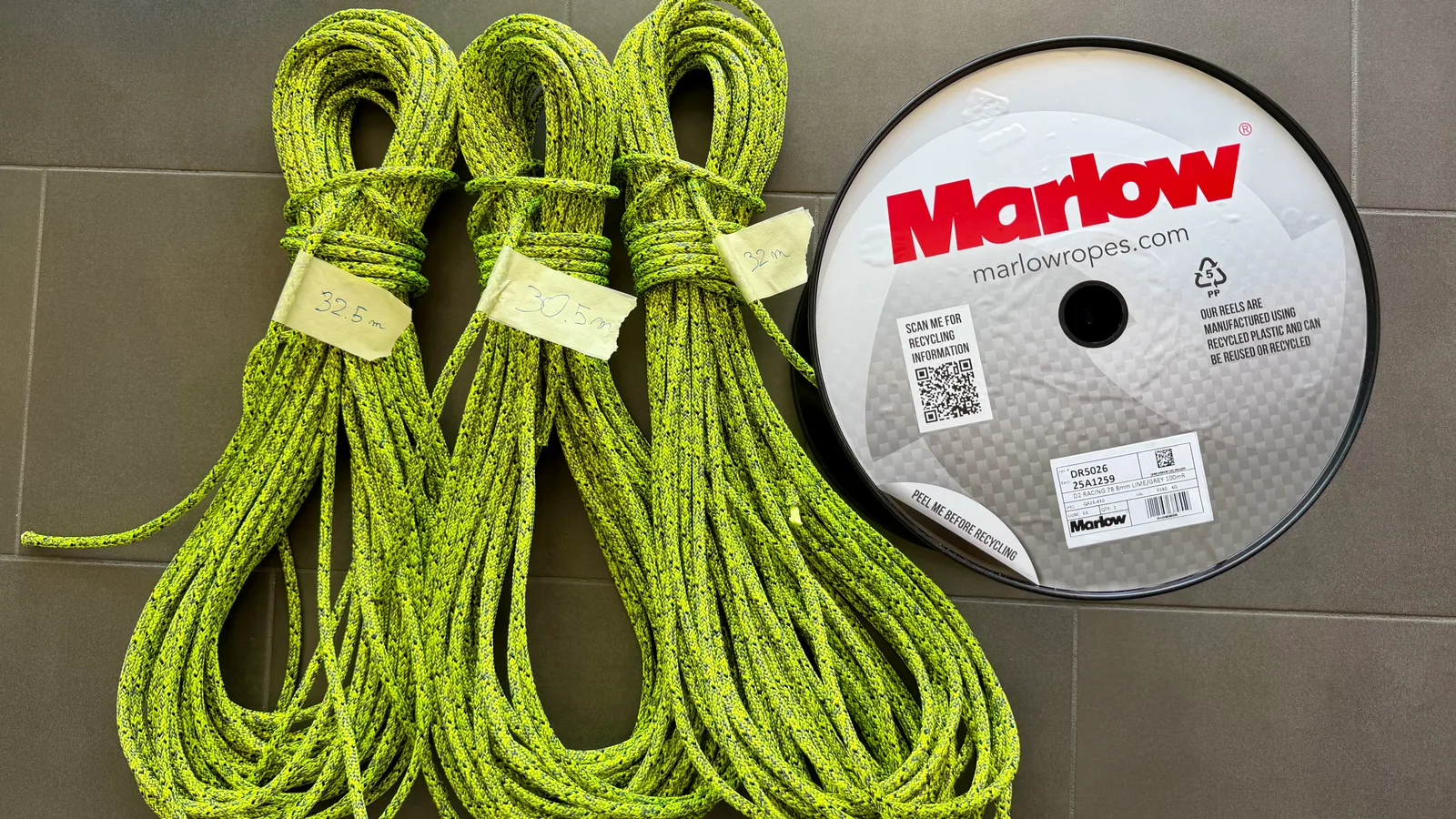
Re-running the halyards of a J/92s on Lake Geneva in Marlow D2 Racing 8 mm: why size down, the colour logic, and terminations you can't drop overboard.
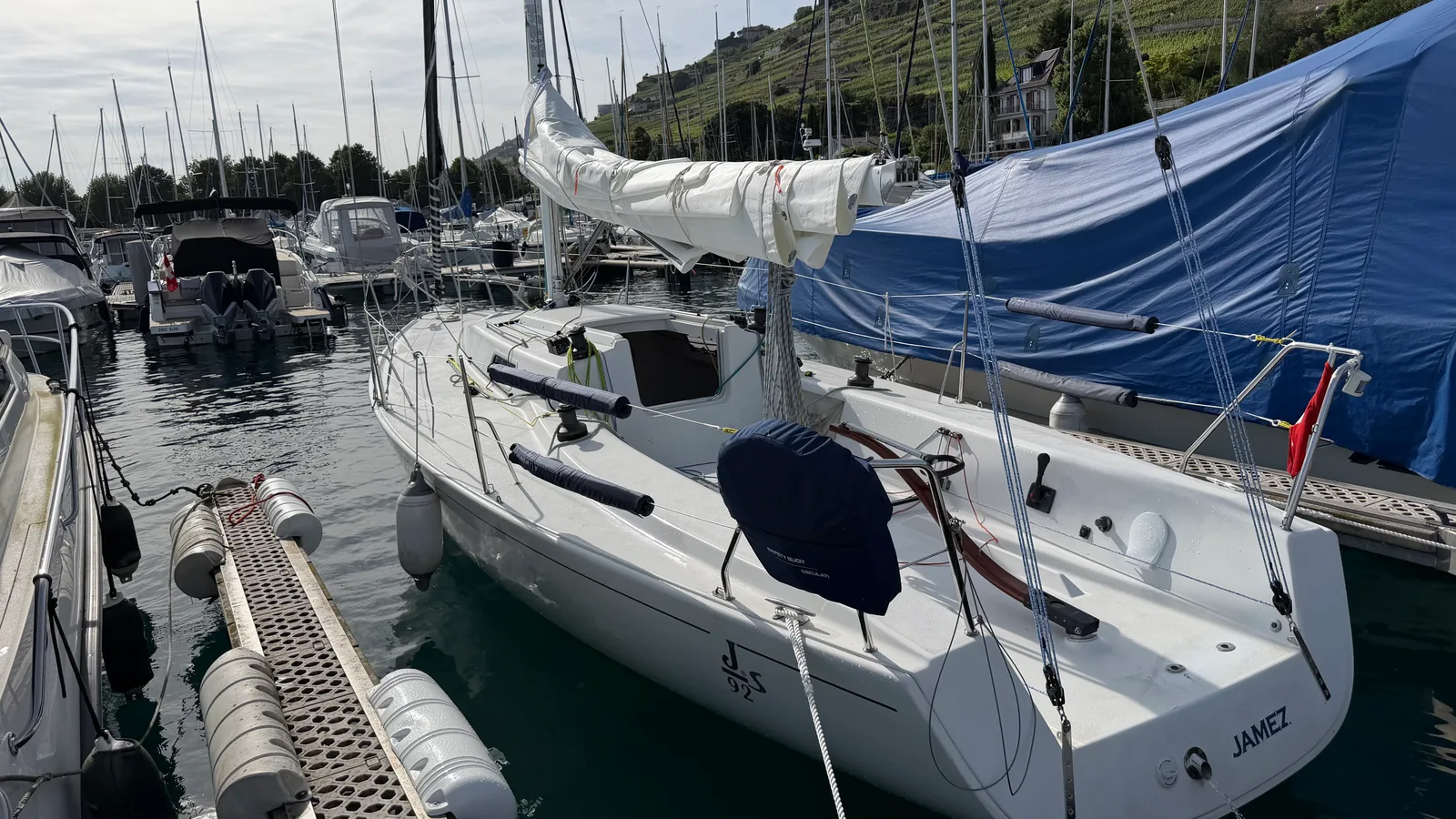
Restoring a J/92s stern safety station: an Osculati horseshoe buoy kit, a straightened stanchion, and a re-welded stern-light plate.
Order your parts, or let’s talk through your programme first.